Exterior house painting provides your home with a weather-resistant surface and refreshes its appearance in one go. However, simply choosing a pleasant color isn’t enough. At the paint department, you might feel overwhelmed when talk turns to different oil-based and water-based paints. Don’t worry—in this article, we’ll review the differences between various paint types and how to choose the right paint type to ensure your exterior painting project succeeds.
What was the house previously painted with? Identifying the old paint is essential
When planning an exterior painting project, you need to take a moment to look back: what type of paint was the house previously painted with? The nature of the old paint is crucial to determine, or the entire project could go wrong. A carelessly chosen paint type can backfire quite quickly: if the paint doesn’t adhere to the old layer, the walls may need repainting as soon as next summer—and in that case, you’re facing a much bigger job, as the incorrectly chosen paint will need to be removed. Identifying the old paint is therefore an important step when planning exterior painting.
As a rule of thumb, you can paint over oil-based paint with water-based paint, but not the other way around. You also need to be careful with traditional oil paints. Exterior walls painted with petroleum oil paint should always be repainted with the same petroleum oil paint. Boiled paint, most commonly red ochre paint, can only be painted over with boiled paint. You can read more about red ochre in our article.
A carelessly chosen paint type can backfire quite quickly: if the paint doesn’t adhere to the old layer, the walls may need repainting as soon as next summer.
So how do you identify the old paint?
If the house maintenance log doesn’t indicate the type of old paint, the paint mystery can be solved by examining a paint chip. An oil paint chip is hard, crumbles when bent, and feels chalky. A chalking surface also readily collects spore growth and mold spots. Water-based paint comes off in larger chips than oil paint, and the strips flex when bent. Red ochre paints release pigment when rubbed. Translucent paint can be recognized by the fact that the wood grain shows through it.
At Väriset, we use laboratory testing if the quality of the old paint won’t otherwise reveal itself. You can find additional tips for identifying paint from Tikkurila, for example.
Exterior Painting and Water-Based Paints
Water-based paint uses polyacrylate copolymer dispersion as its binder. Most exterior painting today is done with water-based paints. This is no wonder, as water-based paints are easy to use.
The popularity of water-based paints in both interior and exterior painting is based on their durability: water-based paints withstand wear, water, and cleaning well. Water-based paint is easier to use than oil paint, as it requires less working. However, water-based paint must also be worked well into its substrate.
Water-based paints withstand wear, water, and cleaning well.
When wet, water-based paint appears slightly more opaque
than when dry. You can have plenty of paint on the brush, and the properties of water-based
paint don’t weaken even if the paint film is somewhat thicker.
At the end of the day, painting tools clean up with just water and
detergent if needed.
While water-based paints were once considered a threat to structural breathability and ventilation, water-based paints today are a completely safe option due to the development of paint binders. With modern construction methods (houses built after the 1990s), such problems don’t exist anyway.
Exterior Painting and Oil Paints
Alkyd oil paints are usually just called oil paints. Their binder is alkyd, and in heritage properties, oil paint remains a popular choice. Oil paint is a slightly more labor-intensive option than water-based paint.
Oil paints dry considerably slower than acrylic paints: drying to dust-free
can take even days. However, unlike
water-based paint, oil paint’s opacity improves as it dries.
When painting with oil paint, you need to be careful not to apply layers that are too thick. A paint layer that’s too thick may start running even hours after painting. Additionally, oil paint expands as it dries, so a layer painted too thickly will wrinkle into an unsightly appearance. Oil paint therefore requires somewhat more precise working than water-based paint. Cleaning tools requires solvents, which are hazardous waste.
Oil paint is a slightly more labor-intensive option than water-based paint.
Over time, oil paints fade faster than acrylate paints: the oil paint surface begins to chalk after a couple of years from the exterior painting. However, this is a characteristic of oil paints and not really a defect. Mold spots appear more easily on exterior walls painted with oil paint than on walls painted with water-based paint. The walls need to be maintenance washed from time to time to avoid them.
In addition to alkyd oil paints, traditional oil paints are also available. The most commonly used traditional oil paints are linseed and petroleum oil paints. Linseed oil paint is common in properties protected by the National Board of Antiquities. Petroleum oil doesn’t expand when drying like other oil paints, so working with it is somewhat easier than with oil paints generally. However, choosing petroleum oil paint should be considered very carefully, as it’s difficult to change to something else later.
Traditional oil paints require working, so leaving them to professional painters is often a good idea. For example, when painting with linseed oil, the painter’s professional skill is emphasized, as the paint surface must be particularly uniform and even. Variation in paint surface thickness easily shows as differences in gloss level when the paint has dried.
Preparation work must be remembered, whichever paint you choose
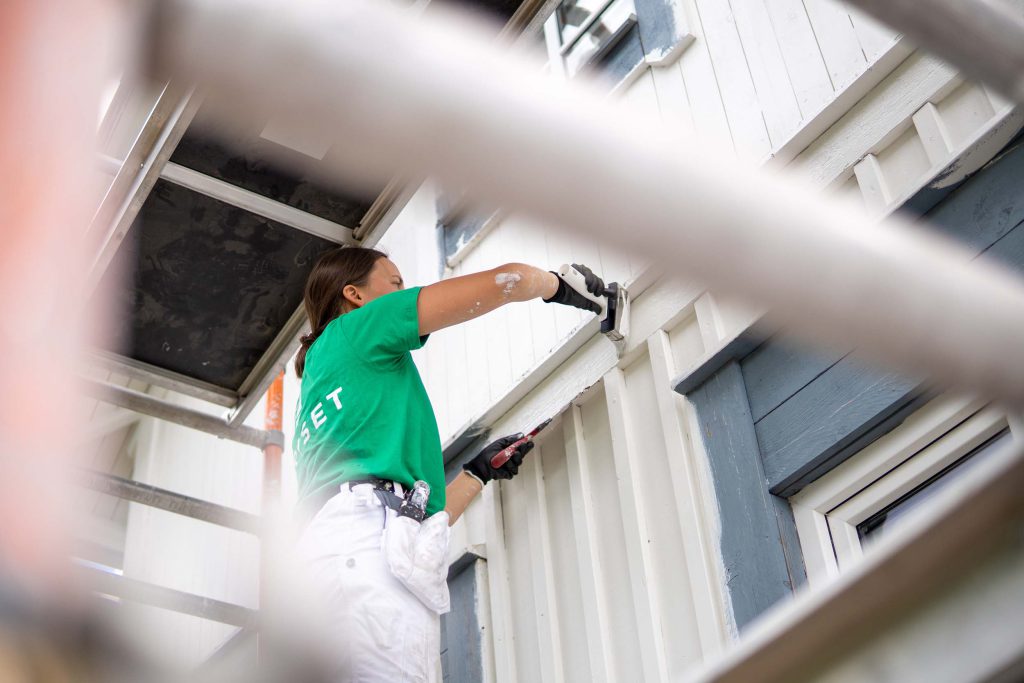
Before you dip your brush, it’s worth taking care of the preparation work so that the exterior painting succeeds. Even if the paint type has been chosen correctly and carefully, carelessly done preparation work can ruin the entire job. At worst, a freshly painted exterior wall will look unsightly as soon as next summer. Carefully done preparation work enables the valuable appearance of exterior walls for as long as possible.
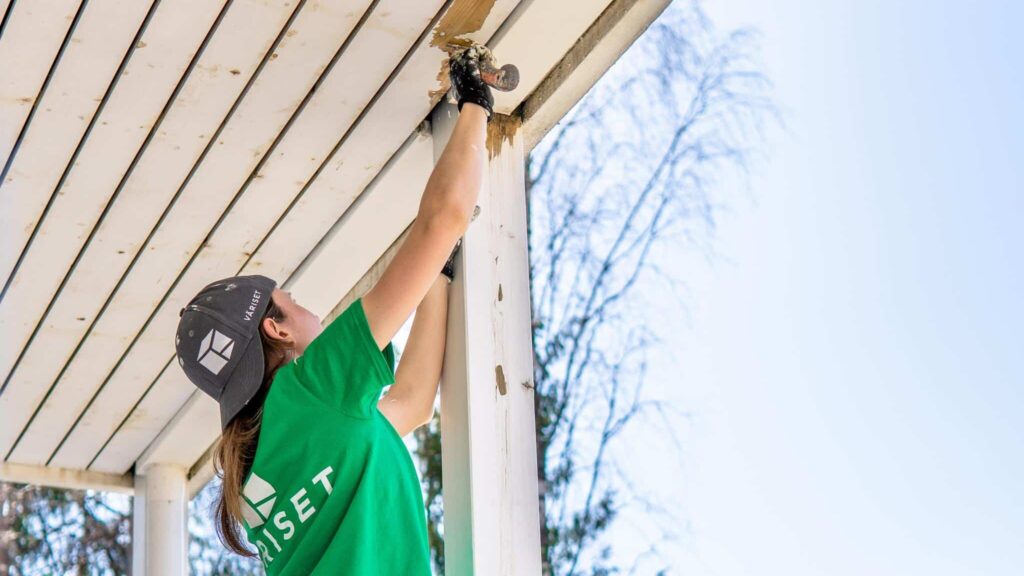
Surface preparation varies according to the object being treated. However, it’s always important to remove loose dirt and flaking paint. Read more about preparation work in our article.
Get a professional on the job
Exterior painting can be done yourself or outsourced to a professional. By leaving the job to Väriset’s professionals, you ensure a successful result that you’ll enjoy for a long time. Read our customers’ experiences of the exterior painting projects we’ve completed and request a free estimate visit!