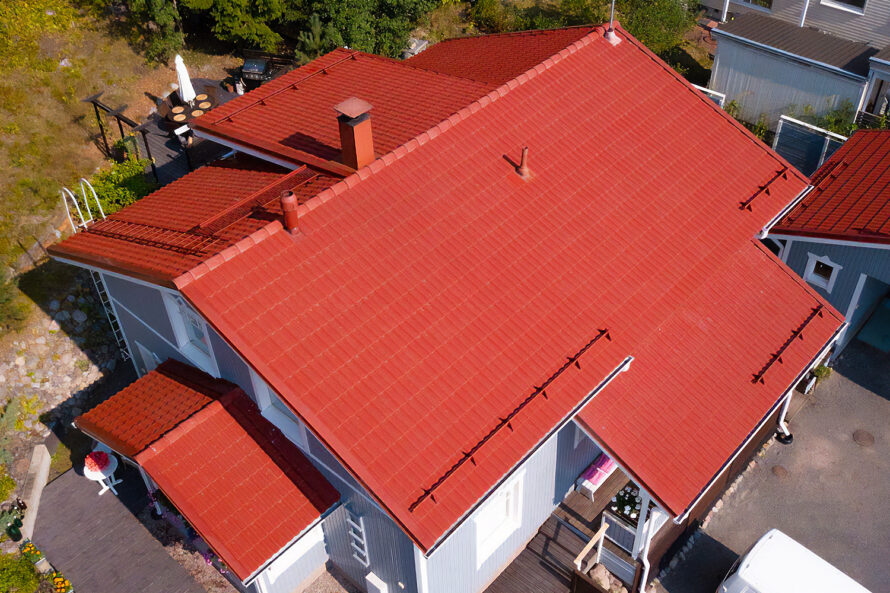
Roof coating is one of the best and most cost-effective ways to extend the lifespan of a roof.
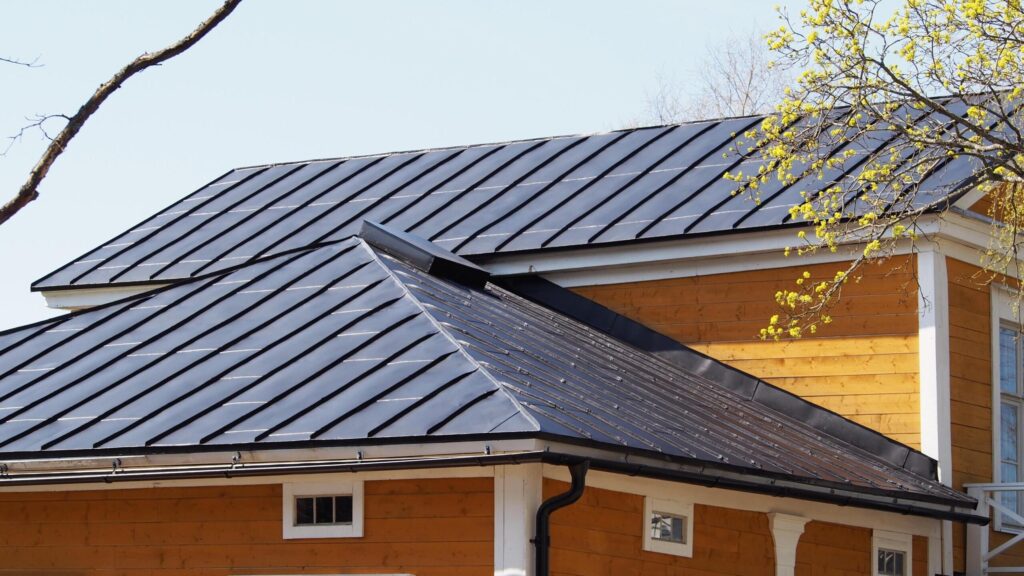
In this article, we’ll go through how tile roof coating is done in practice. When it comes to metal roofs, we talk about metal roof painting instead of coating—with the exception of thick-film coatings designed for metal roofs.
Roof coating requires proper protection
Before starting the preparatory work, it’s extremely important to protect the house walls carefully. Tile roofs often have moss that, when wet and falling from the roof, splashes dirty water onto the house walls and surroundings. Careful protection of surfaces is much easier and less troublesome than removing dirt—which may sometimes even be impossible.
Even if there’s hardly any moss on the roof, it’s still worth protecting the walls from wash water, because washing loosens color from the tiles, which also stains the wash water. Cleaning dirt splashes from stone and brick walls in particular is very laborious.
It’s worth protecting the walls from wash water, because washing loosens color from the tiles, which also stains the wash water.
The best way to protect is with a large tarp. The tarp is attached to the eaves or soffit so that the tarp’s edge hangs to the ground and preferably extends a bit further away from the house along the ground, carrying the wash water farther from the house walls.
After washing, moss and other debris can be conveniently collected from the tarp. Terraces should also be protected, and patio furniture, cars, and other items should be moved farther from the house walls.
Roof coating work begins with washing the roof
Preparatory work is important in all painting work. In exterior painting work, however, its significance is further emphasized and significantly affects the durability of the roof coating. The first task in tile roof coating is to thoroughly clean the roof.
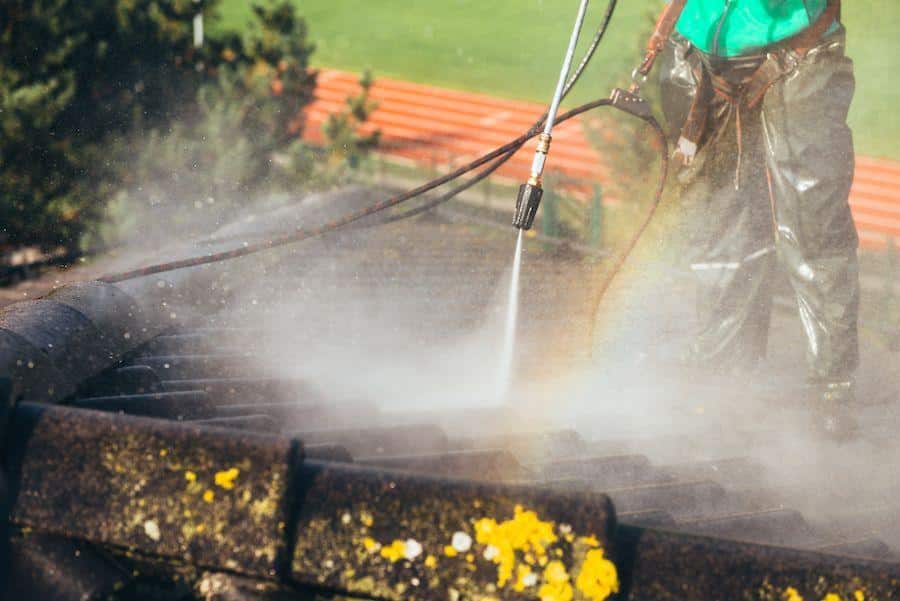
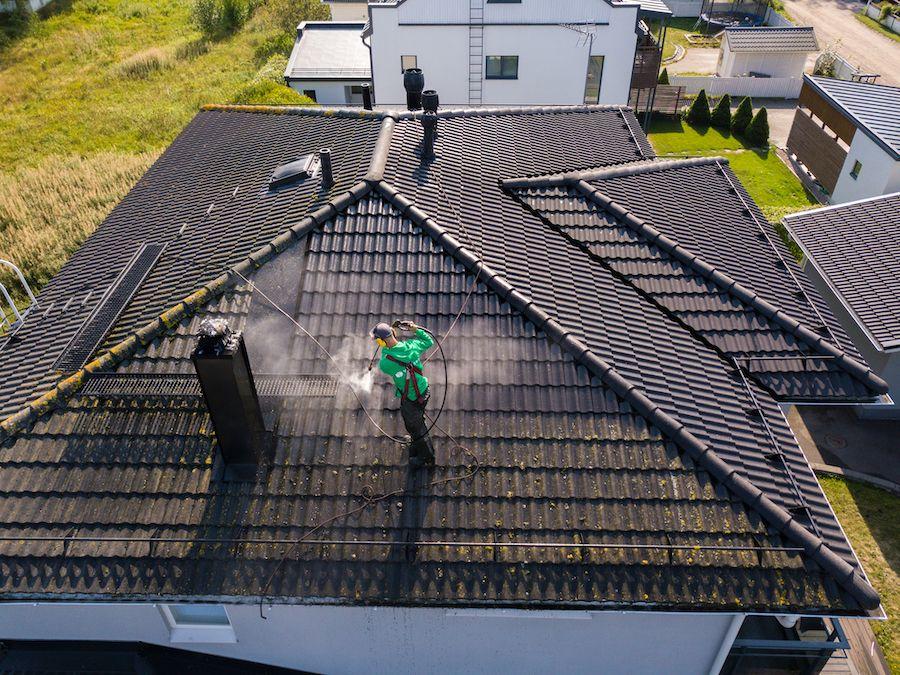
For washing tile roofs, a gasoline-powered pressure washer designed for professional use, with sufficient pressure and water volume, works best.
Before starting the wash, it’s worth checking that the flashing, penetrations, and underlayment are in good condition so that water doesn’t get into the wrong place. It’s also worth checking that the underlayment is installed correctly at the penetrations.
A gasoline-powered pressure washer designed for professional use, with sufficient pressure and water volume, works best for washing.
This can be done by removing a few roof tiles from above the penetrations. Similarly, all broken tiles are replaced with new ones before starting the wash. On tile roofs, it’s extremely important to direct the wash downward from the ridge so you don’t shoot water under the tiles into the underlayment with pressure.
On tile roofs, it’s extremely important to direct the wash downward from the ridge so you don’t shoot water under the tiles into the underlayment with pressure.
For the actual washing of the tile roof, nothing else is needed besides the pressure washer. After washing, once the roof has dried, a biocide is applied. The biocide’s purpose is to destroy moss and other living growth that has penetrated inside the porous tile.
The solution is allowed to work for about 24 hours. After this, it’s not washed off but is left under the coating.
Roof coating and work stages
Once the roof has thoroughly dried after washing and the biocide has had time to work undisturbed, it’s time for the coating stage. When coating a tile roof with colored paint coating, it’s first treated throughout with primer.
The primer used is typically the topcoat paint diluted by 10-20%.
The primer used is typically the topcoat paint diluted by 10-20%. The purpose of the primer is to penetrate deep into the tile’s pores and thus provide the most effective protection for the tile and a good bonding surface for the topcoat.
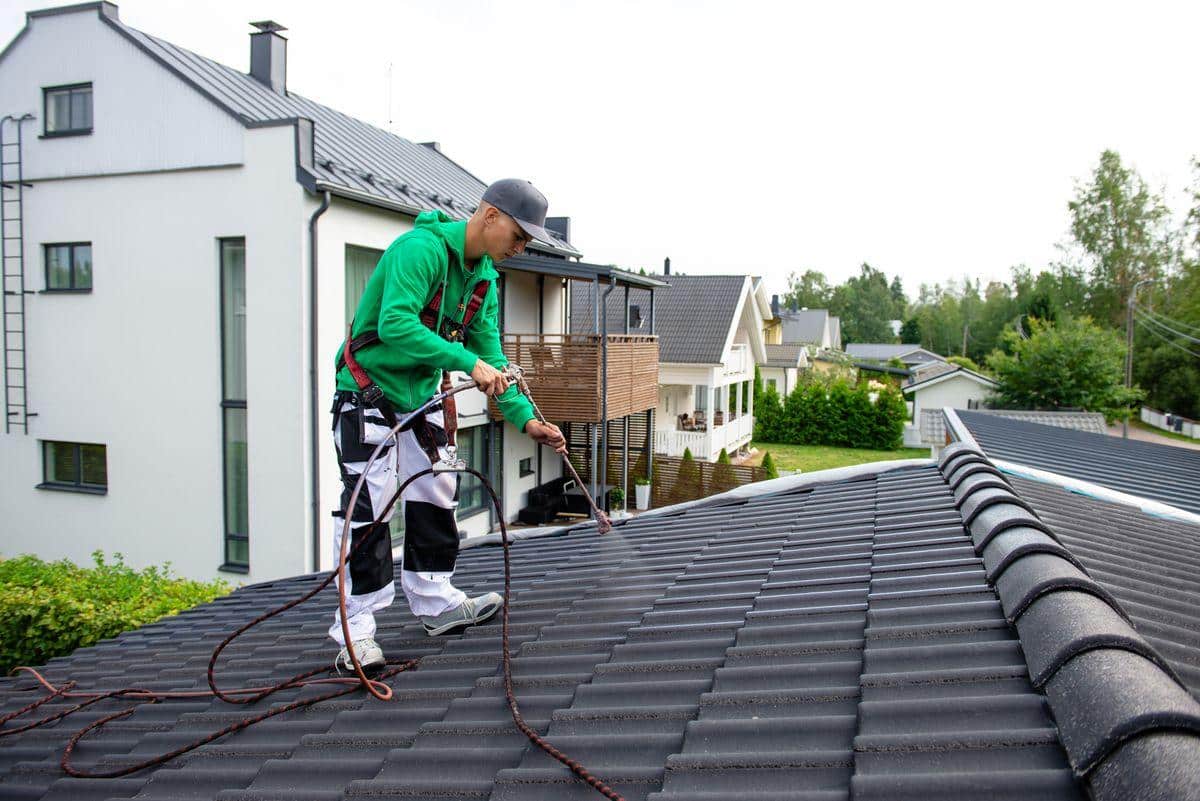
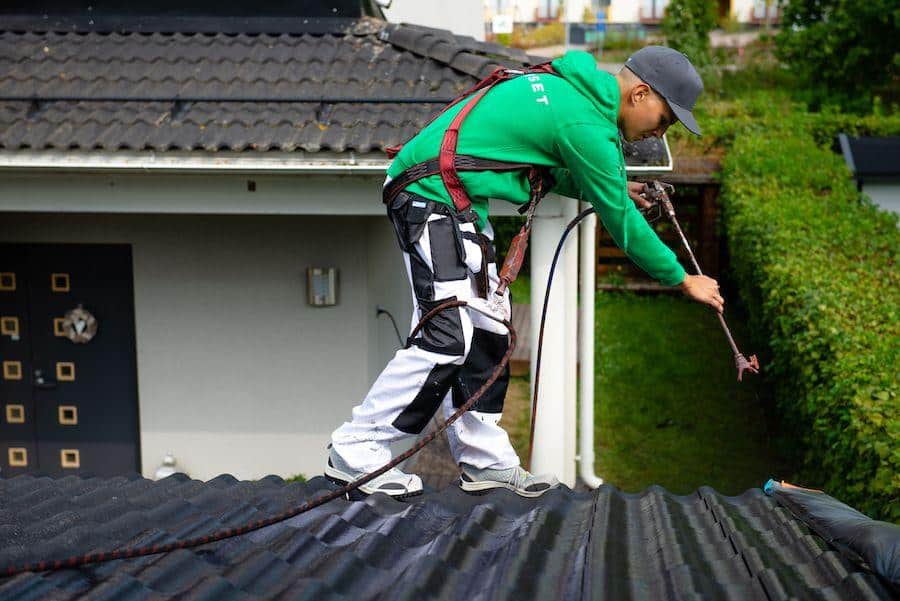
Tile roof coating is primarily always done with a spray gun. However, edges and other precise areas should be done with a brush to ensure the coating protects the tile ends precisely and to prevent paint mist from going over the eaves onto the house walls.
Tile roof coating is primarily always done with a spray gun.
It’s also worth using a brush for, for example, the edges of chimney flashing when you don’t want to paint the flashing.
Tile roof topcoat painting is done in one coat with undiluted paint. A lighter, colorless tile roof coating, the so-called protective treatment, is done in a similar way to tile roof paint coating, with the difference that the coating is applied only once, meaning the primer stage is omitted.
Things to consider in tile roof coating
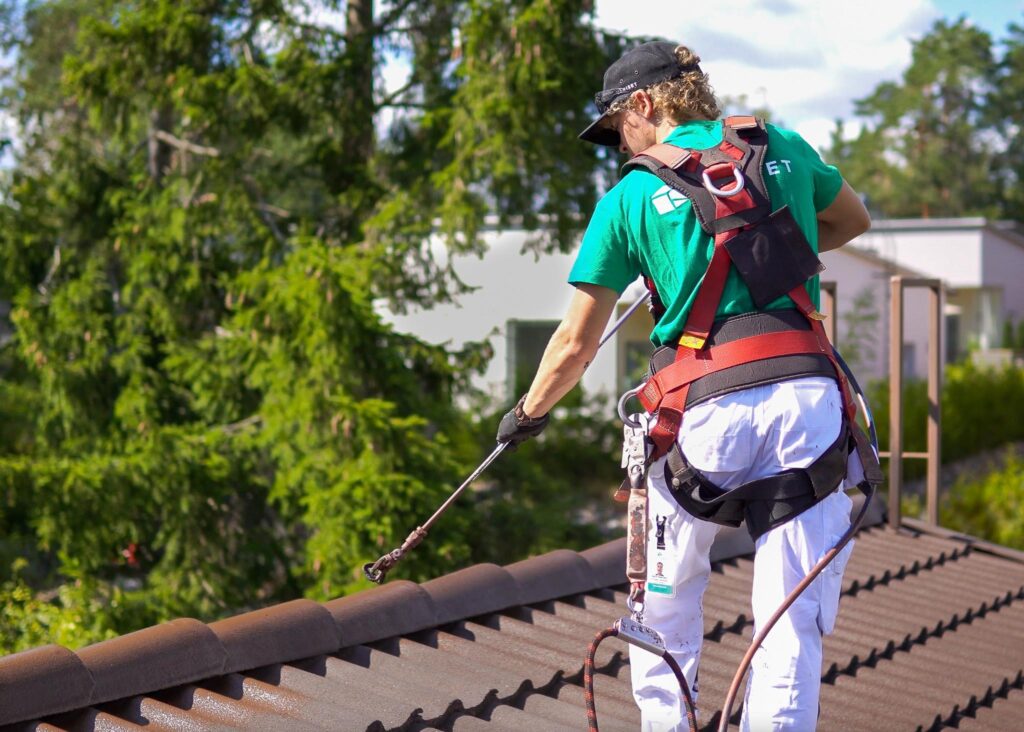
When working on a roof, it’s especially important to take care of work safety. A wet tile roof is really slippery, and a careless step without safety harnesses can be fatal. The first task when heading to the roof is to set up the harnesses.
A careless step can easily break tiles.
There’s no reason to take unnecessary risks by relying on your own skill and balance, because even falling from a low roof can end badly. A professional always uses appropriate protective equipment when working on a roof, which also includes safety harnesses.
Another thing to consider is moving around on a tile roof. A careless step can easily break tiles. Especially when moving on a tile roof in any poor condition, you should always step on the end of the tile, not the middle.
If a tile breaks underfoot despite everything, the tile is replaced with a new one, because water can get onto the underlayment through broken tiles.
Plants along the house walls should be well protected before starting roof coating work.
Another noteworthy matter is handling the biocide. It’s exactly what its name suggests: not only does it destroy moss and other unwanted plants, it destroys ornamental or useful plants in the same way if it gets on them.
All plants to be preserved along the house walls should be well protected before starting roof coating work.
Why is roof coating worth doing?
Due to varying weather conditions, roofs are subjected to extremely heavy stress here in Finland. Summer’s scorching sun, autumn rains, and winter snow loads are all factors that test tile roofs.
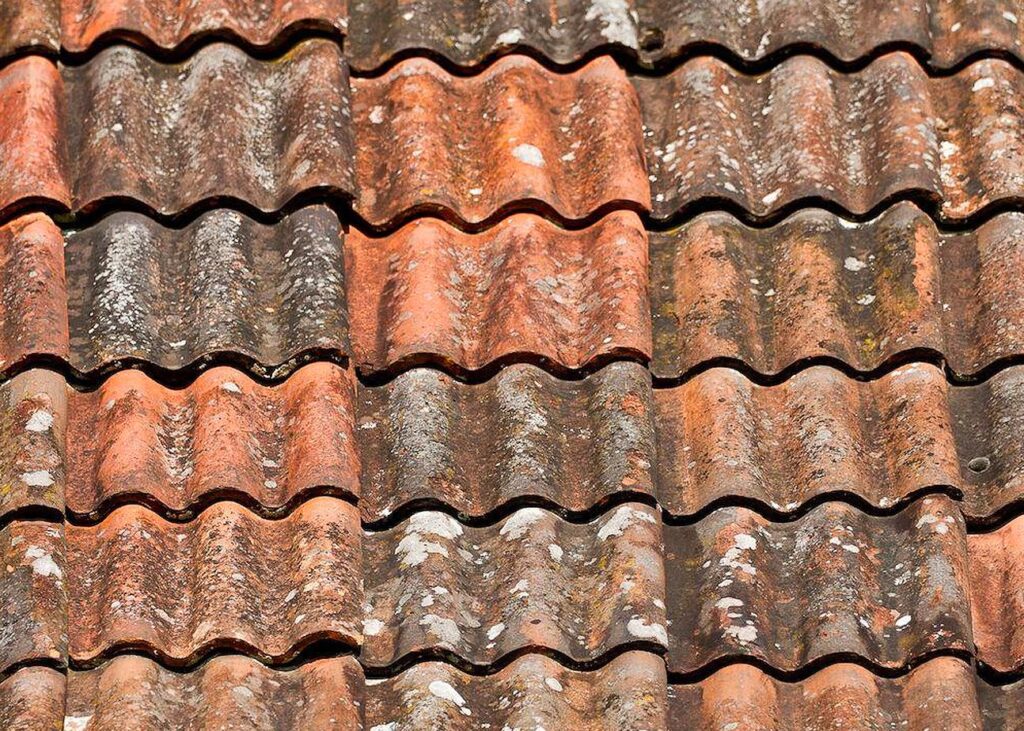
Unprotected tile collects moisture and moss gradually begins to grow on it.
New roof tiles come with a factory coating that protects the tile from dirt and moisture. Over time, however, the factory coating wears off, exposing the bare tile. Unprotected tile collects moisture and moss gradually begins to grow on it.
Moss binds more and more water to the tile surface, keeping the tile moist for longer. The more water in the tile, the worse it’s affected by frost damage from temperature fluctuations, which eventually begins to break the tile.
If completely neglected, a tile roof can reach the end of its life twice as fast as a maintained roof.
With coating, water can’t penetrate inside the tile and thus protects it from frost damage. Roof coating also significantly reduces the possibility of moss growth on the tile surface.
If completely neglected, a tile roof can reach the end of its life twice as fast as a maintained roof. Regular maintenance thus extends the roof’s lifespan by even tens of years and consequently saves the homeowner real money.
Of maintenance measures, tile roof coating is definitely the most effective way to protect the roof.
Fall in love with your home again – See our services
House Painting
Fall in love with your home again - restore your home's appearance and value
Exterior house painting restores your home's appearance and value. Flawless workmanship is of utmost importance to us. We always ensure that the final result is even and perfectly finished.
Timely roof maintenance extends your roof's lifespan by decades
An intact, maintained, and painted roof is every home's most important protection. Tile roof coating and maintenance services as well as metal roof painting services as turnkey solutions.
Take advantage of the household deduction – up to €3,200 benefit from the work. Try the calculator
The household deduction in 2026 is 35% of the VAT-inclusive portion of the work performed. The deductible is €150. The benefit is €1,600 per person, meaning the maximum deduction for a couple is €3,200 in total
Order a free survey visit to your home. You'll receive an assessment of maintenance needs and a quote for the work. Book a survey or calculate a price estimate with our calculator in just a few minutes.
Ostrobothnia, South Ostrobothnia, Central Finland, Central Ostrobothnia, North Ostrobothnia, Lapland, Kymenlaakso, Päijät-Häme, South Karelia, South Savo, Kainuu
Perttu Aunio
Regional Manager
Southwest Finland
Subscribe to the newsletter and win a roof maintenance service (value €349)
The Väriset newsletter provides home maintenance tips for homeowners, along with benefits and special offers. Subscribe to the newsletter and enter the monthly roof annual maintenance draw.
We operate throughout Finland
Shall we get started?
Ask for more information or request a quote. We'll respond by the next business day at the latest.