Maintenance painting of a wooden house is not something to overlook. An intact and clean paint surface protects the house from moisture, airborne impurities, and dirt, thus extending the lifespan of the exterior cladding. Well-maintained exterior cladding looks good and increases the value of the house. Read our comprehensive DIY instructions for maintenance painting in our article.
How to identify the need for maintenance painting?
As a rule of thumb, the exterior cladding of a house should be painted approximately every ten years or when clear problems are visible. The maintenance interval for wood cladding treated with translucent products is considerably shorter than this.
The most common signs that the maintenance painting interval for a wooden house has been stretched too long are
- paint cracking and peeling
- color fading, and especially in oil-painted houses
- mold spots.
The paint surface rarely wears evenly, as wear is greatly affected by factors such as the direction of exposure and the house’s surroundings.
For example, the south-facing wall often fades faster than other walls due to the sun: the maintenance painting interval for south-facing walls may be shorter than 10 years. A wall shaded by wild vines or other plants is more exposed to moisture, which can cause algae and mold growth on the paint surface and paint peeling.
The exterior cladding should be inspected annually, so that any problems are detected in time. When maintenance painting is done early enough, the painting work is easier to carry out and therefore also more affordable when ordering the work from an external contractor.
Maintenance painting of a wooden house and paint selection
Paint selection plays an important role in the success of the work.
Acrylic paint can be applied over oil paint but not vice versa.
The easiest option—and in some cases the only option—is to choose the same paint that the house was previously painted with. If you want to change the paint type for some reason, the basic rule is that acrylic paint can be applied over oil paint but not vice versa.
Some paints, such as petroleum oil paints and boiled paints, are a category of their own, and special care should be taken with them. For example, it is never recommended to paint anything other than red ochre paint over red ochre paint.
There are various tests available to help identify the paint, with instructions found on different paint manufacturers’ websites. If the old paint cannot be identified even with instructions, you can take a piece of board from the wall to the paint store for consultation.
Comprehensive advice on paint selection is also available, for example, from Tikkurila’s Paint Line phone service. You can also read more about choosing the right paint in our article.
Preparation work is the most important stage of maintenance painting
The importance of preparation work cannot be overemphasized when painting the exterior surfaces of a house. Carelessly done preparation work is one of the most common reasons for painting work to fail.
Careful preparation work ensures that the painted surface looks evenly beautiful and that the new paint surface withstands the stresses of the coming years.
If there are even slight mold spots on the surfaces to be painted, the walls must be washed with a mold cleaning agent.
Preparation work includes cleaning the surfaces to be painted and removing old, poorly adhering paint.
If there are even slight mold spots on the surfaces to be painted, the walls must be washed with a mold cleaning agent. Mold cleaning agent prevents mold from spreading again under the new paint surface. If there is no mold, dry brushing is sufficient for cleaning the walls.
After cleaning the walls, it’s time to remove the old paint.
If necessary, water and a suitable detergent can be used, but washing with water is not essential for successful painting if there is no visible dirt. Washed walls must be allowed to dry thoroughly before painting.
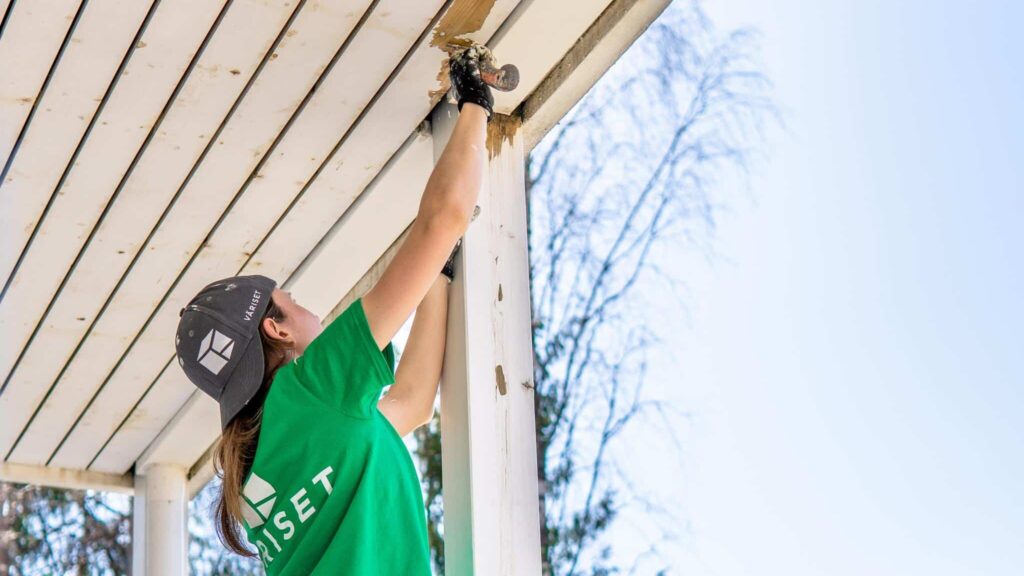
After cleaning the walls, it’s time to remove the old paint. There is no need to remove all the paint—it’s enough to remove paint that is poorly adhered to the substrate.
You can read more about paint removal in our article Removing old paint from exterior walls before maintenance painting—how is it done?
During preparation work, it’s also good to check whether there are any rotten wood parts in the wood cladding. This can be determined, for example, with a knife. If the knife tip sinks easily into the wood, the wood part must be replaced with a new one.
A new look for a wooden house with topcoat painting
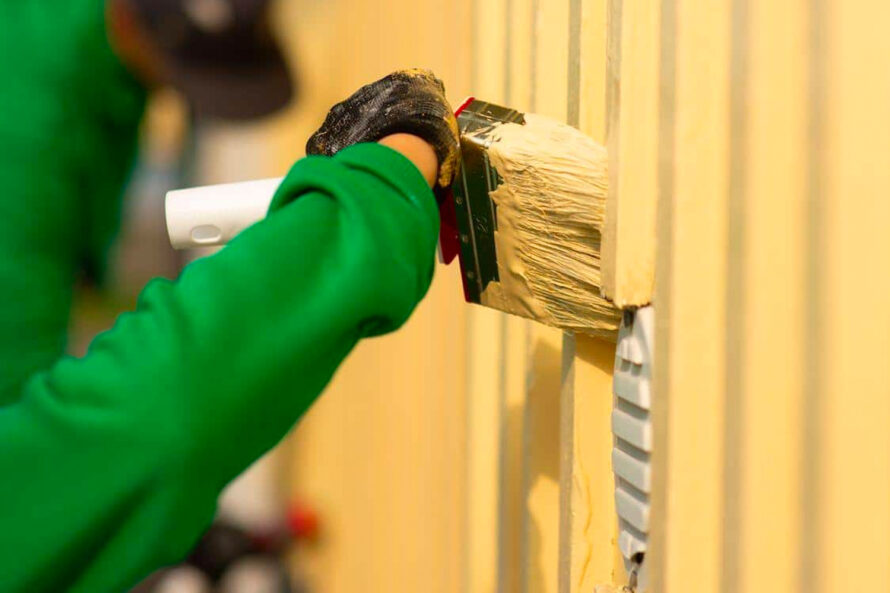
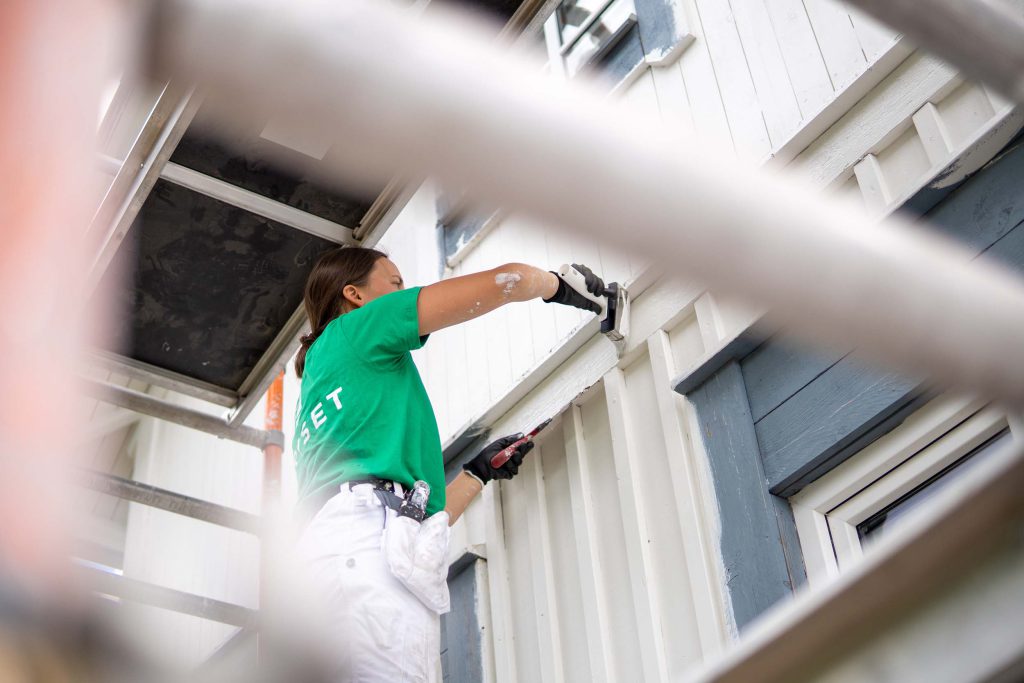
After carefully done preparation work, it’s pleasant to move on to painting. The first step is to prime all areas scraped down to bare wood.
Priming can be done with a separate primer, but topcoat paint diluted by about 10% works just as well as a primer.
If the house color stays the same, one coat of paint is usually sufficient. When changing color, however, two coats of paint are needed.
If you choose a primer other than topcoat paint, it’s important to ensure its compatibility with the surface being treated and the chosen topcoat paint.
Important aspects of topcoat painting include careful masking and adequate protection, the right amount of paint, which is significantly affected by the chosen paint type; proceeding one area at a time to achieve a consistent paint finish, and of course taking into account the right painting weather.
If the house color stays the same, one coat of paint is usually sufficient. When changing color, however, two coats of paint are needed.
Keeping exterior walls clean between maintenance paintings
Between maintenance paintings, walls can and should be cleaned. Walls painted with water-based paint often stay clean more easily than oil-painted walls and often only need brushing with a dry brush, which removes dust, cobwebs, and loose debris.
If dry brushing alone is not enough, the wall can be washed with water and a suitable detergent can be used if necessary.
As the paint surface ages, it becomes rougher, making dirt and dust stick to it more easily. If dry brushing alone is not enough, the wall can be washed with water and a suitable detergent can be used if necessary.
Detergent is applied from bottom to top to avoid unsightly dirt streaks.
If there are mold spots on the wall, you should consider painting the exterior cladding. Visible mold can be washed off using mild detergents.
The problem, however, is that mild detergents do not completely remove mold but leave microbes from which mold spreads to the washed surface again soon.
Actual mold cleaning agent, on the other hand, kills mold effectively, but it is a strong detergent that also wears the paint surface, making it porous. A porous wood surface must be protected with a new paint surface.
Keeping wood cladding in good condition can also be helped by ensuring that the walls can ventilate well. For example, in winter, snow piles should preferably be collected elsewhere rather than along the walls of the house.
Similarly, vegetation shading the house and especially climbing plants on the walls of the house should be pruned when you want the paint surface to last as long as possible.
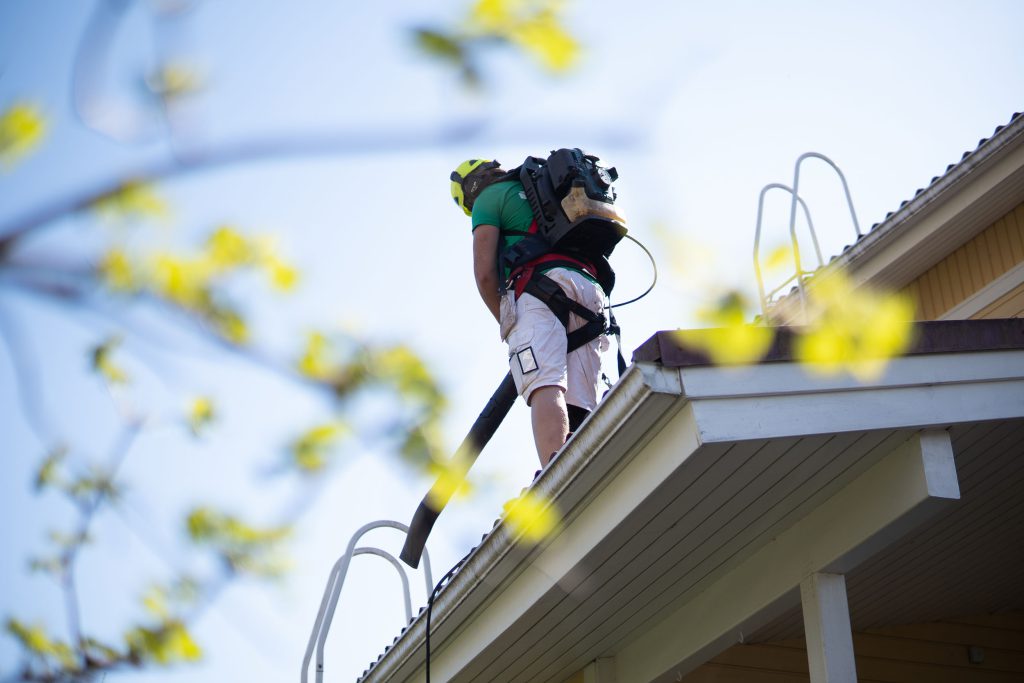
A functional and regularly cleaned rainwater system also has its own role in maintaining the exterior cladding.
Paint yourself or hire a professional?
When maintenance painting of a wooden house is deemed timely, a decision must be made whether to paint yourself or have the work done by a professional. Painting can be done well by a homeowner too, and doing the work yourself saves money.
The price of a painting project consists mainly of labor, so the household deduction is a significant benefit – –.
However, the resources required for the work should be taken into account, and you should make sure you have the right paint and the right working methods before picking up a brush.
Having the work done by a professional, on the other hand, saves a considerable amount of your own time and effort, and you also get a guarantee for the result. When you order the work from a company registered in the prepayment register, you also get a household deduction for the work.
The price of a painting project consists mainly of labor, so the household deduction is a significant benefit, especially if you can take full advantage of it.
If you’re considering having the work done by a professional or need an assessment of the need for maintenance painting, feel free to ask us to visit for an estimate. We don’t charge anything for the visit and it doesn’t commit you to anything.