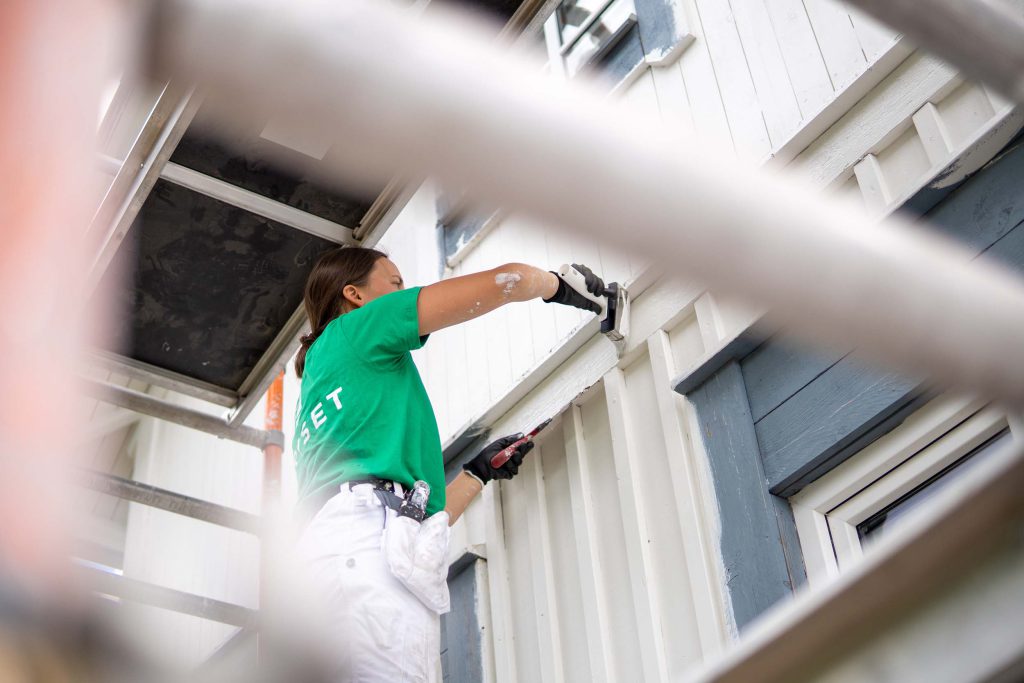
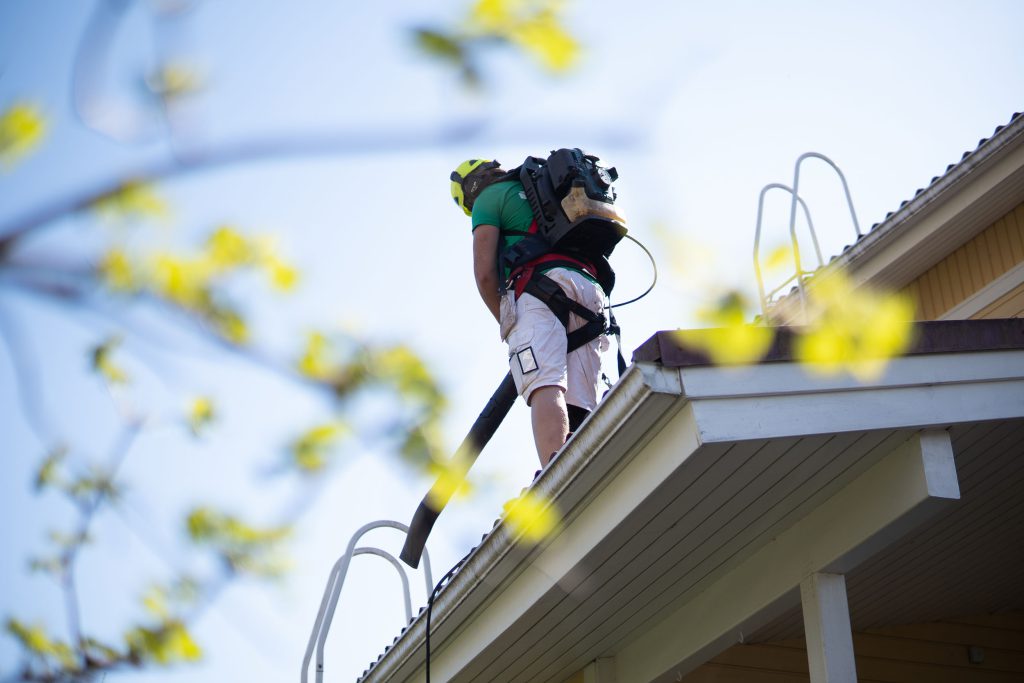
Of all the surfaces of a house, the roof is subjected to the harshest stress due to weather changes, air pollutants, and plant debris accumulating on the roof. On a metal roof, these stresses first appear as wear on the paint surface and, over time, as rust, which, if left untreated, will eventually create a hole in the roofing sheet.
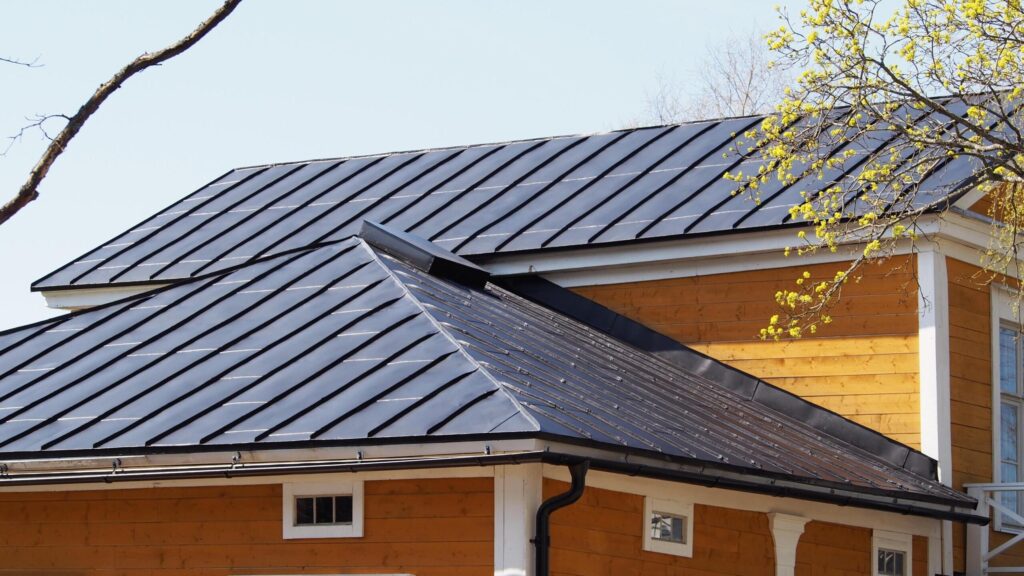
In this article, we focus on rust removal from standing seam metal roofs.
Why Does a Metal Roof Rust?
The most common material for standing seam metal roofs is galvanized steel sheet, which is later protected with a paint coating. When bare steel reacts with its environment, it oxidizes and begins to rust.
The thin zinc layer on top of the steel sheet is designed to protect the steel from corrosion. If the roof is subjected to an external impact that breaks the paint surface and exposes the roofing sheet, the zinc on top of the sheet, being a less noble material than steel, corrodes first, and the sheet remains undamaged.
As the zinc corrodes, its corrosion products form a protective layer over the steel.
However, the zinc layer is not permanent. It is particularly worn down by air pollutants such as carbon, sulfur, and nitrogen compounds, which are more abundant in urban and industrial environments.
Similarly, salty marine climates are a strain on the zinc layer of a metal roof, though not as severe as air pollution.
Metal Roof Rusting Can Be Prevented
The best protection against weather stresses on a metal roof is an intact paint surface, which protects both the zinc layer and the sheet beneath it.
The recommended maintenance painting interval is 10 years.
The roof should be painted for the first time 2–5 years after installation, once the zinc surface of the sheet has sufficiently oxidized. Paint will not adhere properly to the zinc surface of a newly installed sheet. Maintenance painting is best done before actual problems appear. The recommended maintenance painting interval is 10 years.
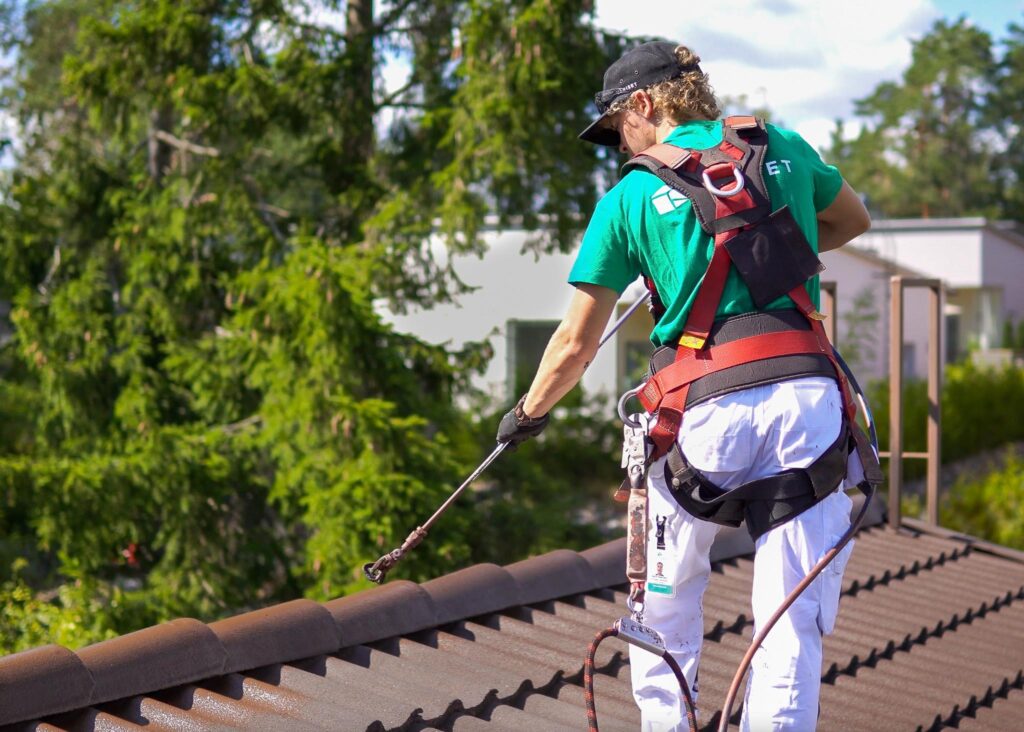
Keeping the paint surface in good condition for as long as possible requires keeping it clean. Rainwater easily keeps a new or freshly painted metal roof clean from loose dirt and air pollutants.
However, as the coating ages, rainwater alone is no longer sufficient to keep the roof clean, and it requires occasional maintenance washing. Cleaning also includes removing loose debris from valleys and rainwater systems about twice a year.
Read more in our article How and When to Maintain a Metal Roof.
How to Get Rid of Rust?
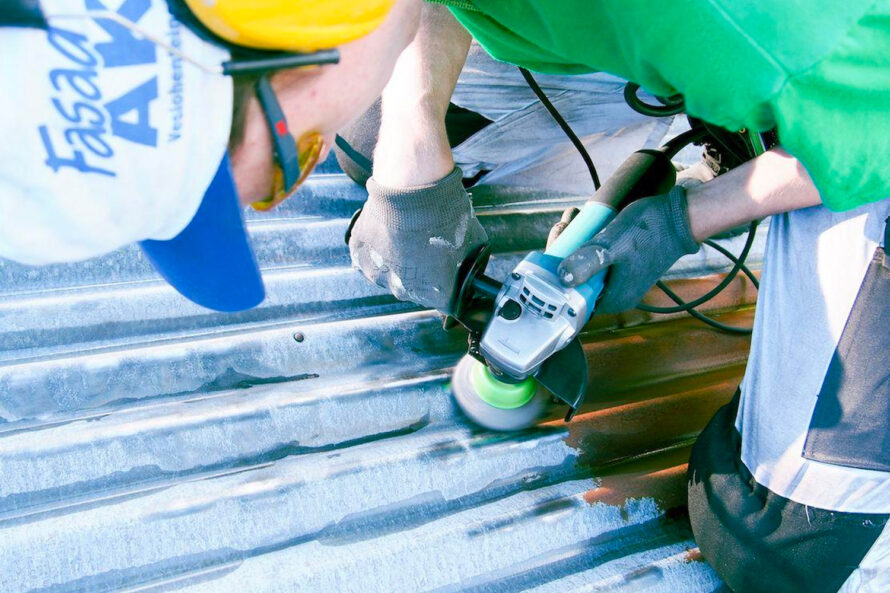
Rust can only be removed from the roof mechanically, either by hand with a steel brush or mechanically by grinding. The work is sufficient when all rust and flaking paint have been removed from the rusted area, leaving only bare sheet metal.
After rust removal, all bare metal areas must be primed with rust-preventive primer to prevent rusting from starting again.
Rusting of unprotected steel surfaces begins and progresses quite rapidly. After rust removal, all bare metal areas must be primed with rust-preventive primer to prevent rusting from starting again.
Painting can be done as spot painting only on the treated problem areas, but it is more advisable to paint the entire roof at once, especially if there is any doubt about more extensive problems in the paint surface or roofing sheet.
Rust Removal Work Steps
Rust removal must be done very carefully to ensure that all rust is definitely removed before applying the primer.
If even a little rust remains under the paint, the primer cannot adhere to the sheet due to the thin layer of rust in between. The paint may stay on the roof for a year, for example, or as long as the paint film is not impacted.
But if even a small damage occurs to the paint surface, the paint will come off the spot-painted area again very quickly.
Exposed paint edges should be sanded smoother to ensure that the old paint is sufficiently firmly attached to its substrate. This also produces a neater final result.
During rust removal, all poorly adhering old paint is also removed from the roof. Poorly adhering paint may come off with effective pressure washing alone.
Exposed paint edges should be sanded smoother to ensure that the old paint is sufficiently firmly attached to its substrate. This also produces a neater final result.
After this, the roof is thoroughly washed and rinsed and allowed to dry. Once the surfaces are dry, the bare metal areas are primed with a suitable primer and then painted either once or twice with the chosen paint and method.
The primer should be applied as soon as possible after rust removal, because unprotected roofing sheet is very susceptible to rusting again.
Patching Holes in Metal Roofs
Usually, holes in a metal roof are caused by an external factor. For example, the sheet may have been hit with a shovel during snow removal work, or the sheet may have been damaged during the installation of roof safety products or snow guards.
If the hole is detected in time and the sheet around the hole is still intact, soldering is a good option for patching the hole.
Before patching the hole, rust must be carefully removed from the roofing sheet.
Another option for patching holes is various patching compounds. An excellent option among these is the Kemperol sealing method. Kemperol is a two-component patching compound that is reinforced with fleece fabric.
The area patched with Kemperol can be painted over with any paint suitable for the roof. Before patching the hole, rust must be carefully removed from the roofing sheet.
If metal roof maintenance has been completely neglected and the roof has consequently deteriorated badly, a roof renovation may be the only sensible option.
This is the case, for example, when the roof has rusted too thin or even through as a result of natural wear. In such cases, patching holes is no longer sensible, as it is likely that the roof is in poor condition throughout.
Inspect Your Metal Roof Annually
It is important to inspect and maintain the roof regularly so that potential problems are found in good time and can be fixed before major damage occurs.
Prevention is always a better and also more affordable option than repairing damage that has already occurred.