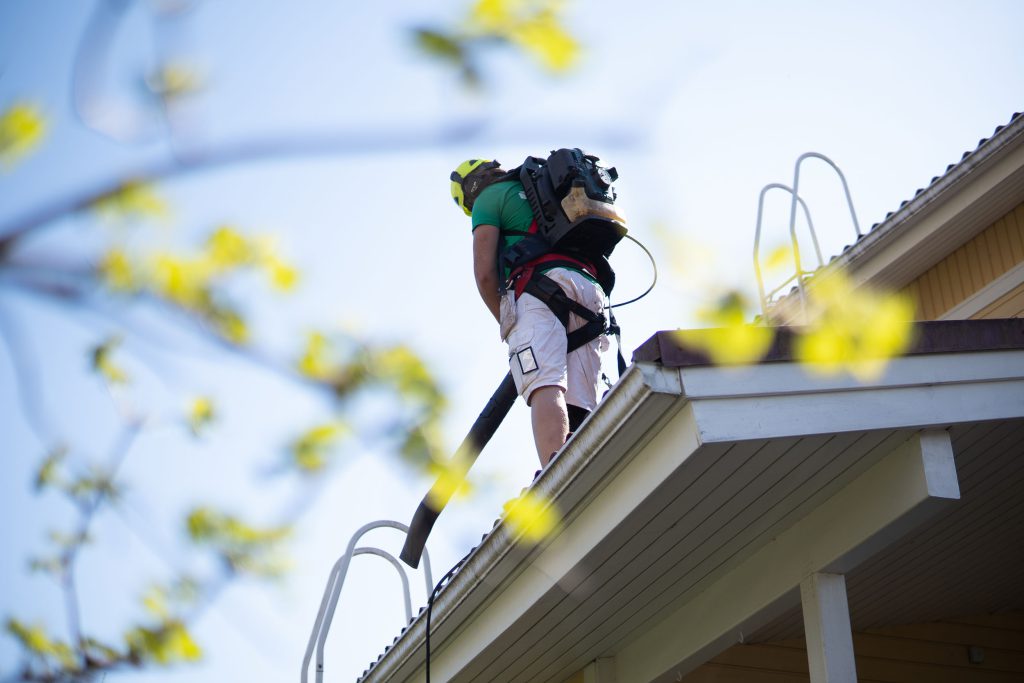
A tile roof requires regular maintenance to withstand all the stresses it faces. In this tile roof maintenance guide, we’ll show you how to keep your roof in good condition year after year. It’s best to perform the inspection in spring, after the snow has melted.
A tile roof is currently one of the most popular roofing options for new homes. It’s stylish, quiet, and extremely long-lasting – when properly maintained. Since the roof is usually not visible to the home’s occupants, it often receives less attention than it should.
However, tile roof maintenance requires regularity to withstand all the stresses it faces intact and for as long as possible. We’ll explain how to keep your tile roof intact and long-lasting.
Tile Roof Maintenance Needs Are Determined by Climbing onto the Roof
Check your home’s roof annually so you maintain up-to-date knowledge of its condition and any maintenance needs. This way, unpleasant surprises won’t develop on the roof when maintenance work is done on time and potential problems are addressed as soon as they appear.
How is a tile roof annual inspection done? The roof’s condition is determined by climbing onto the roof and examining it thoroughly. Check these areas:
- Roof tiles. Are there any broken tiles on the roof? If so, it’s good to replace them with new ones immediately.
- Penetrations. Check that penetrations are sealed and there are no leaks.
- Rainwater systems. Are they intact and can water flow freely? If leaves or other debris have accumulated in the rainwater system, remove the blockages.
- Eaves. Make sure the eaves are intact and water can flow freely.
- Snow guards and roof safety products. Check that snow guards and roof safety products are intact and their fastenings are in good condition.
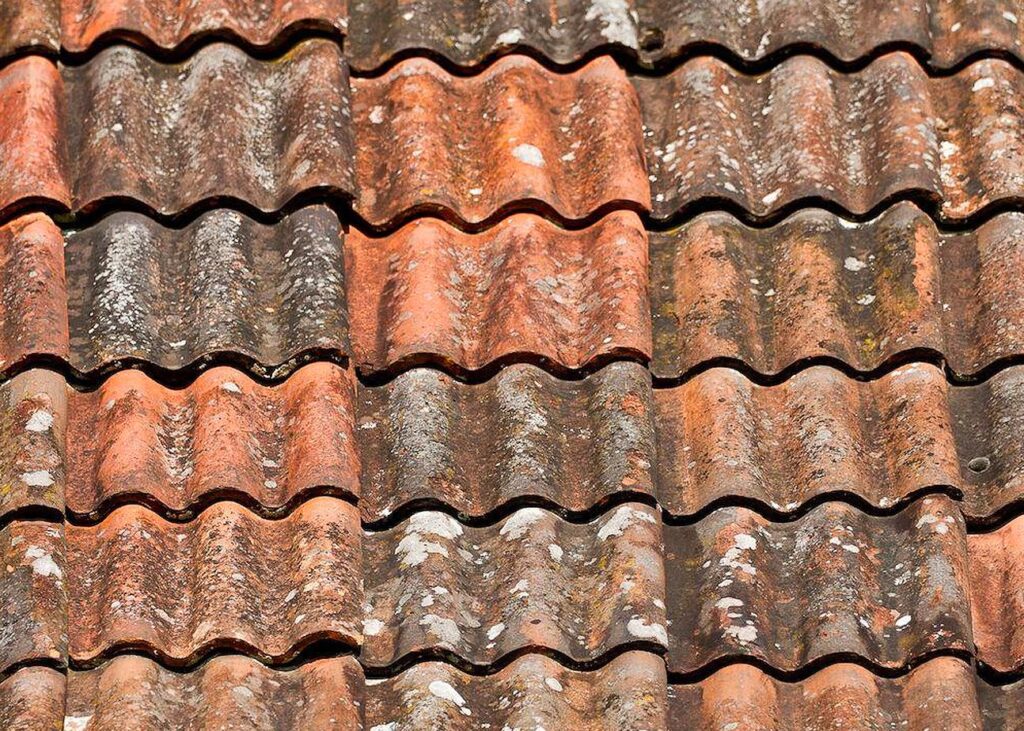
- Moss growth. Is there moss visible on the roof? You should get rid of it. See here for instructions on moss removal.
- Roof coating. Make sure the coating is intact and sufficient. The appropriate viewing distance is about one and a half meters.
- Underlayment. Check that the underlayment is in good condition and dry.
Moisture and Temperature Fluctuations Test a Tile Roof
The most important tile roof maintenance task is to keep it clean and protect the roof tiles from moisture. New roof tiles come with a factory coating that protects the tile from dirt and moisture.
Over time, however, the coating wears away, exposing the bare tile. Unprotected tile collects moisture and gradually begins to grow moss. Moss itself is harmless, but its problem lies in its excellent ability to bind water to itself and simultaneously to the tile.
When water in the tile freezes, it expands and causes cracks in the tile.
The more water there is in the tile, the more severely it’s tested by temperatures fluctuating around zero, which are common in Finnish weather conditions. The problem with temperature fluctuations is that when water in the tile freezes, it expands and causes cracks in the tile.
When the temperature then rises above zero again, even more water accumulates in the crack, which in turn, when freezing, further expands the already existing crack. This is called frost weathering, which over time breaks down the tile.
Tile Roof Maintenance Instructions
Reducing Moisture Prevents Tile Deterioration
Frost weathering can be reduced by promoting water evaporation from the tile roof. This is significantly helped by removing all loose debris, moss, and lichen from the roof, as they impair and in the worst case completely prevent the roof tiles’ ability to dry.
If there are shading or littering trees very close to the house, you should consider cutting them down. Not only do plant debris such as twigs, cones, and leaves collect water on the roof, they also wear down the roof’s coating by rubbing against the roof due to wind and rain.
Snow Removal from a Tile Roof
Regular tile roof maintenance tasks also include snow work. A heavy snow load stresses the roof’s structures. In spring, when the snow melts and snow masses come down from the roof on their own schedule, heavy snow mass can break tiles and pose a danger to residents moving around the area.
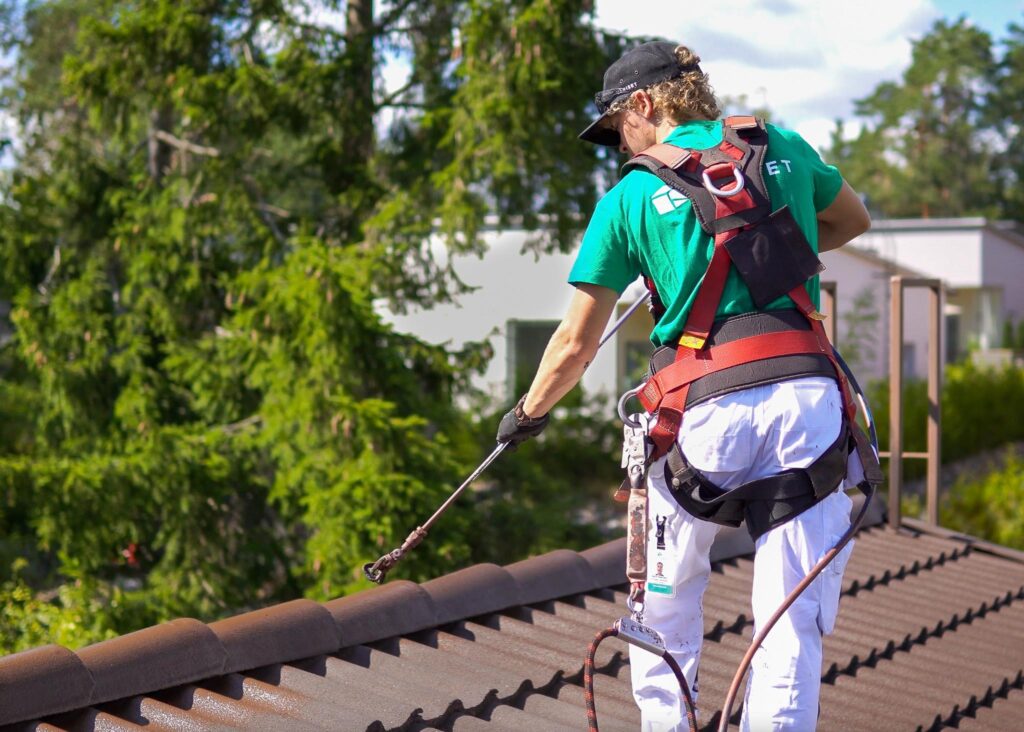
Snow should be dropped from the roof when the snow layer thickness is about half a meter. When dropping snow – as always when moving on the roof – it’s important to take care of work safety and use harnesses.
Also noteworthy is careful work so as not to damage tiles, snow guards, and roof safety products with a shovel or careless steps. It’s good to leave about ten centimeters of protective snow layer on the roof so as not to accidentally damage the tile’s coating.
Protect Your Tile Roof with Coating
The best long-term maintenance measure for a tile roof is coating it with either a clear coating or a colored paint coating. The protection is practically the same in both, but paint coating gives the roof a like-new appearance in addition to protection.
paint coating gives the roof a like-new appearance in addition to protection.
The coating prevents water from absorbing into the tile and thus protects it from frost weathering. The coating also significantly reduces moss growth opportunities on the tile surface.
Tile roof coating offers the homeowner about ten years of more worry-free maintenance.
Read our customers’ experiences with tile roof coating and request a free assessment visit if you wish.