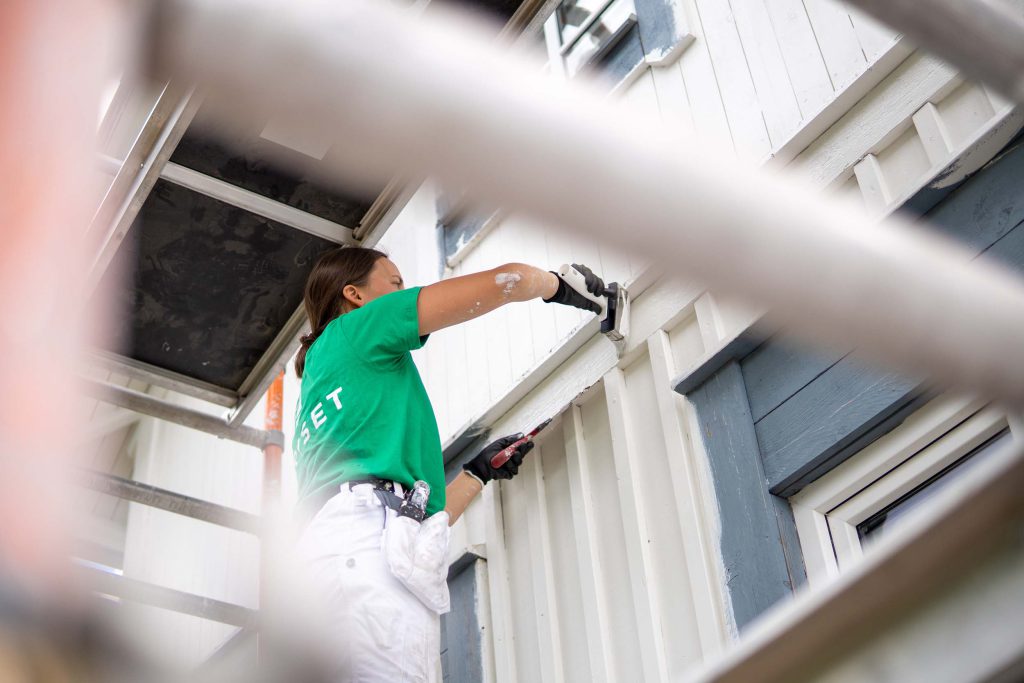
High humidity, rain, evening dew, hot sunshine… There are weather conditions under which you shouldn’t apply paint to the exterior of your house. This article provides tips on considering the weather in your painting project, so your house painting has the best possible chance of success.
When is the best time to paint a house?
The optimal painting time is traditionally from May Day to Midsummer.
This is because during winter, the house structures have had time to dry thoroughly, and on the other hand, Finland’s climate is at its driest from late spring to early summer in terms of the number of rainy days and also measured by precipitation amount, considering that painting cannot be done at all in winter due to snow and freezing temperatures.
The optimal painting time is traditionally from May Day to Midsummer.
However, not all painting projects can be scheduled precisely between May Day and Midsummer, nor do they need to be. Late summer and early fall are perfectly good times to paint a house, as long as you consider a few factors.
Exterior Painting and Temperature – What is Suitable Painting Weather?
The best weather for painting exterior walls is warm, overcast conditions. In these conditions, the paint dries evenly and it’s also easier to achieve a uniformly neat finish.
The minimum requirement for air temperature is usually +5 degrees during both painting and paint drying. Some paints may require a slightly higher temperature.
Suitable application conditions are always stated in the product instructions and should be reviewed before starting work. The temperature requirement applies to the air as well as the surface being painted and the paint being used.
The minimum requirement for air temperature is usually +5 degrees during both painting and paint drying. Some paints may require a slightly higher temperature.
Another prerequisite for suitable painting weather relates to air humidity. There are various measures for measuring air humidity, but when discussing painting weather, we look at relative humidity.
This refers to a percentage that indicates how much water vapor is in the air compared to the maximum amount that can exist as water vapor at that temperature.
During painting and paint drying, the relative humidity should be below 80 percent.
During painting and paint drying, the relative humidity should be below 80 percent. Relative humidity is reported in most weather services.
If the humidity is too high or the temperature too low, the paint film’s drying slows down and the film cannot form properly. This results in a weak paint film that may crack. It’s worth being careful with weather conditions.
How Does Different Weather Affect the Paint Finish?
The first prerequisite for success in any painting project is that the surface to be painted is clean and dry.
Paint applied to a damp surface cannot adhere properly to its substrate – an excessively hot surface is also an unfavorable painting substrate.
It’s worth being strict about this and allowing the walls to dry thoroughly after washing or a heavy rain. Paint applied to a damp surface cannot adhere properly to its substrate, and the paint surface may therefore remain weak and come off prematurely.
On the other hand, it’s good to note that an excessively hot surface is also an unfavorable painting substrate. Sometimes you do have to paint in hot weather – especially if heat waves like last summer’s become more common.
Surfaces sheltered by a terrace can be painted even in the rain.
However, you should always try to paint on the shaded side and follow the sun’s path, because in direct sunlight the paint can dry too quickly and may consequently either adhere poorly or become uneven. Painting in hot sunshine can also cause the paint surface to bubble.
Rain damages a freshly painted surface. Water-based paint dries to withstand light rain in about two hours, but oil paint requires at least 24 hours. Paint choice therefore has a major impact on what kind of weather window you should start painting in.
In late summer and fall, morning and evening dew present their own challenges.
You naturally cannot paint in direct rain, but surfaces sheltered by a terrace, for example, can be painted even in the rain, as long as the surfaces to be painted are dry and the relative humidity is below 80%.
In late summer and fall, morning and evening dew present their own challenges, which, especially when painting with slow-drying oil paints, significantly shorten the working time suitable for painting.
Morning dew must evaporate before starting painting, and the freshly painted surface must have time to dry dust-free before possible evening dew settles. Moisture on a fresh paint surface can cause the paint surface to become dull.
How to Prepare for Weather Changes?
A house painting project inevitably takes several days. Sometimes Finland’s variable weather conditions bring challenges to completing a painting project. To avoid the painting work failing or being unsuccessful due to weather, it’s important to plan the project somewhat in advance.
The first thing to plan is paint selection. As mentioned above, water-based paint dries considerably faster than oil-based paint. Fast paint drying brings flexibility to the work.
Fast paint drying brings flexibility to the work.
If, for example, the weather forecast has promised rain for the afternoon, you can still paint in the morning, as long as you ensure a couple of hours of drying time.
If you don’t have previous painting experience, it can be difficult to grasp how long each work phase takes or how much you can paint in one day. However, it’s good to make some kind of progress plan and try to always complete one whole section before the day ends.
This ensures a uniform paint finish on each surface. Weather forecasts should be monitored during the project so you can make changes to the plan if necessary or implement a backup plan.
Professional painting work always comes with a guarantee regardless of conditions.
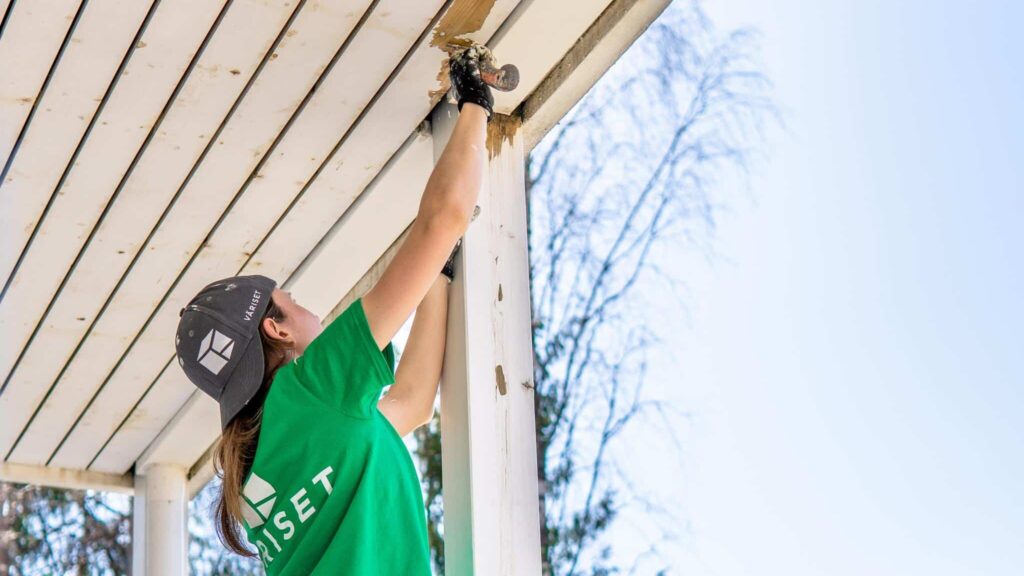
As a backup plan, you could, for example, leave sheltered wood parts for last in case of rainy days. These include eaves and the interior parts of a carport or terrace.
This way rain cannot interrupt the entire painting project, as you can paint the wood parts sheltered from rain in between and continue with other walls later. The relative humidity percentage must of course be checked in this case as well.
In Finland’s variable summer conditions, you often have to paint in borderline weather out of necessity. If you don’t have enough time for painting or unstable weather conditions make you hesitant and slow to start work, calling in a professional is an option.
It’s good to remember that professional painting work always comes with a guarantee regardless of conditions. At Väriset, the price naturally doesn’t change either, even if the work’s completion is delayed due to weather. If you wish, you can book us for a free estimate visit.
Read more about exterior house painting
Planning to paint a post-war house? Read 5 + 1 tips for painting the exterior of a post-war house!