Maintaining a detached house involves various regular tasks designed to keep the building’s structures and conditions at the desired level. By taking care of this maintenance, your home’s value is preserved.
When it comes to the exterior surfaces of a house, annual maintenance tasks include, for example, window cleaning, gutter and rainwater drain cleaning, and repairing loose or damaged areas. Maintenance work that needs to be done less frequently includes exterior wall cleaning and maintenance painting, roof cleaning, and painting or coating depending on the roofing material.
Why should wooden house exteriors be maintained regularly?
1. Maintenance extends the service life of the facade and roof
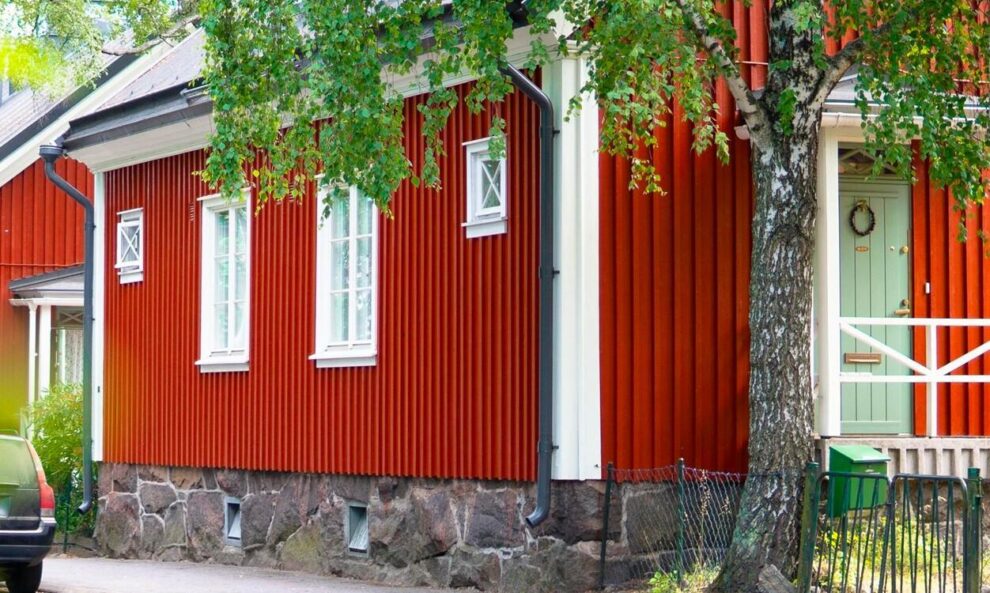
An intact and clean paint surface on exterior cladding does much more than please the eye. It protects the exterior cladding from moisture, airborne impurities, and dirt, thus extending the life of the exterior cladding.
Timely maintenance can significantly extend the service life of wooden house exterior cladding
The target service life of exterior cladding is typically around 50 years for board and brick-clad detached houses. However, the service life can vary considerably depending on factors such as the house’s location and the weather stress it is exposed to. Timely maintenance can significantly extend the service life of wooden house exterior cladding, even by decades.
The same applies to the roof. Fresh color on the roof looks good and brightens the entire appearance of the house, but above all it protects the roofing material from weather changes, moisture, and air pollution. On a metal roof, an intact paint surface prevents rusting, and on a tile roof, adequate coating protects the tile roof from moss growth and frost weathering. The service life of roofing material can also be extended by decades when maintenance is carried out regularly.
2. Well-maintained exterior surfaces affect the sale value of a wooden house and the buyer’s perceptions
The exterior surfaces of a house are among the first things that catch the eye of someone visiting the house or passing by. Generally, outsiders don’t scrutinize the exterior surfaces of a house more closely unless there is something exceptionally attention-grabbing about them.
According to a survey commissioned by Kiinteistömaailma, after location, the condition of the property being purchased has the greatest impact on a home buyer’s purchase decision.
However, the situation becomes completely different when you are looking for a new home for yourself. In this case, special attention is paid to the exterior surfaces of the house, and they significantly affect the impression formed of the house and its condition. If the exterior surfaces of the house are shabby, it easily creates the impression that the house is otherwise poorly maintained and generally in poor condition. The same perception works the other way around: a well-maintained and cared-for exterior gives the impression of a well-kept and thriving house.
According to a survey commissioned by Kiinteistömaailma, after location, the condition of the property being purchased has the greatest impact on a home buyer’s purchase decision. The condition of the property and the impression the buyer gets of the house’s condition are directly related not only to the purchase decision but also to what the buyer is willing to pay for the house.
3. Maintaining surfaces in good condition is more affordable
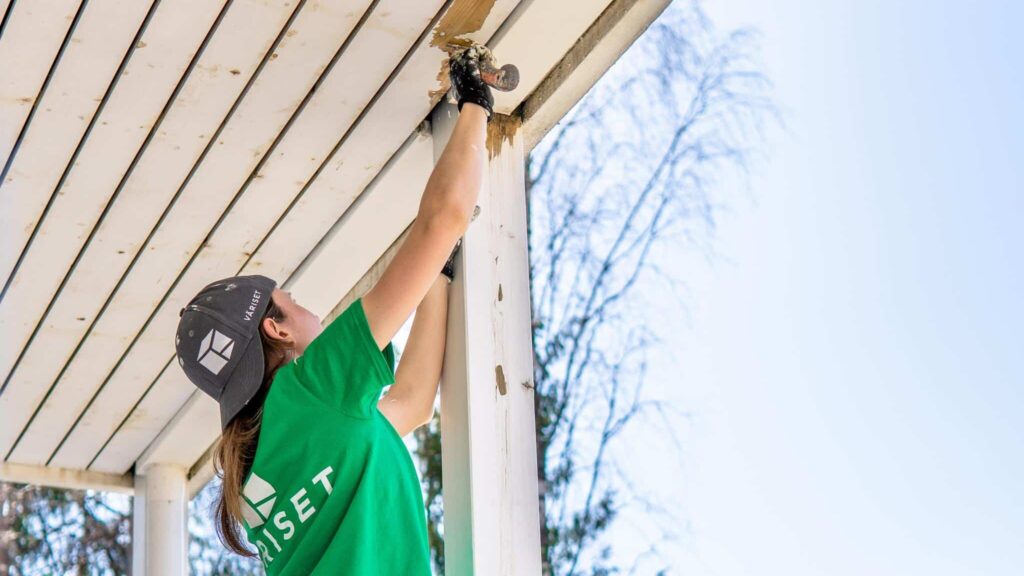
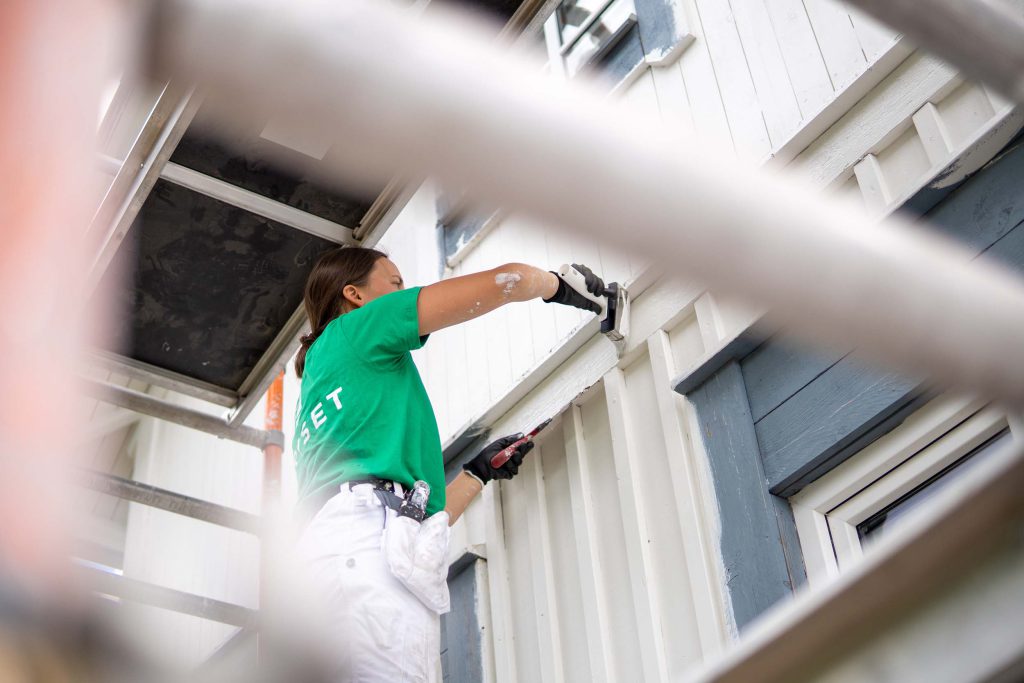
When maintenance painting of exterior cladding or metal roofing is done regularly, it is considerably easier to carry out. This is because when the old paint is still firmly in place, it does not need to be removed, which is often laborious and time-consuming.
When maintenance painting of exterior cladding or metal roofing is done regularly, it is considerably easier to carry out.
Similarly, the wooden parts of the exterior cladding are likely to be in good condition and do not need replacement when maintenance work has been done on time and the wooden parts have been kept protected from the weather. This saves time and effort when doing the work yourself – or money, if the work is ordered from an outside contractor.
On a tile roof, delaying maintenance work can cause excess moisture to accumulate in the roof tiles, which during winter temperature fluctuations causes frost weathering and tile breakage. In this case, coating alone is no longer sufficient, but broken tiles must be replaced with new ones, which in turn brings additional costs.
Exterior surface maintenance – how to maintain and how often?
Maintaining wooden house exterior cladding
The most important thing in keeping exterior cladding in good condition is that the walls can ventilate well, the house has a functioning rainwater system, and the wooden parts have an intact and adequate paint surface.
Ventilation of exterior cladding can be promoted by trimming moisture-retaining vegetation from the immediate vicinity of the house. During winter, it is advisable to pile snow at a sufficient distance from the walls of the house. Gutters should be emptied a couple of times a year, and at the same time ensure that water flows freely in them.
The maintenance painting interval for wooden exterior cladding varies considerably on a case-by-case basis, but typically it is around 10 years. Painting is due at the latest when flaking is observed in the paint surface, the paint surface has faded and worn thin, or mold spots have appeared on the surface. Rot damage also indicates an urgent need for maintenance.
Between maintenance paintings, walls should be cleaned as needed either by dry brushing or using water and mild detergent. You can find more tips for maintaining exterior cladding in our article Wooden house maintenance painting keeps wooden exterior walls looking like new.
Maintaining a tile roof
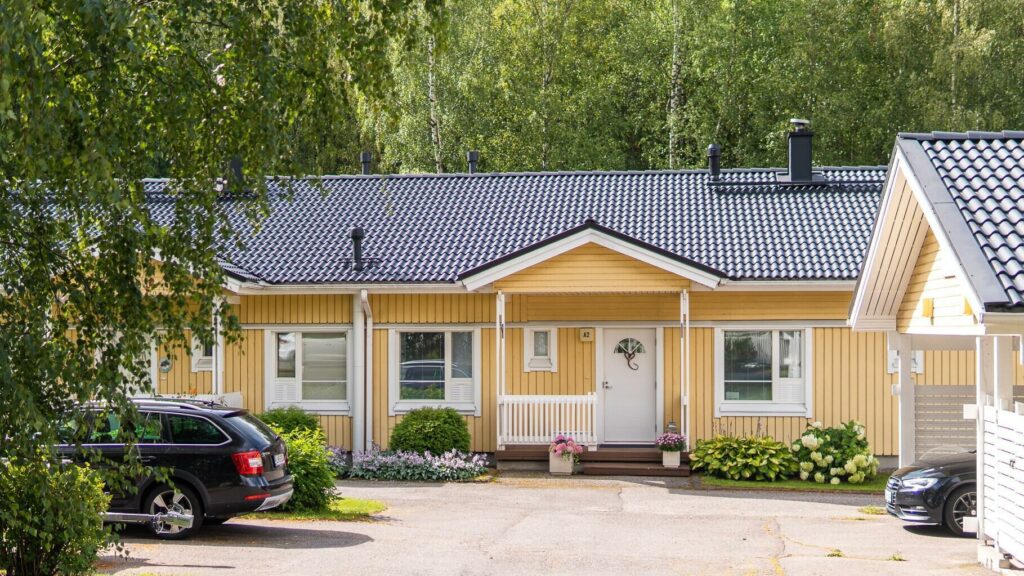
The most essential thing in maintaining a tile roof is reducing moisture from the tile surface. Moisture exposes the roof to frost weathering and is conducive to increasing moss growth on the roof. Annual maintenance tasks to reduce moisture include removing loose debris and moss from the roof. If there are many trees shading the roof in the house’s surroundings, consider trimming them. The tile roof should be inspected a couple of times a year and at the same time check that the roof tiles are intact. Broken tiles should be replaced with new ones immediately.
In the long term, the best maintenance measure for a tile roof is coating it, which provides protection for about ten years. The coating prevents water from being absorbed into the tile and thus protects it from frost weathering. The coating also significantly reduces the possibility of moss growth on the tile surface – moss absorbs water like a sponge. Read more about tile roof maintenance in our article Tile roof maintenance – spring is the best time to check the roof’s condition.
Maintaining a metal roof
The most important maintenance measure for a metal roof is keeping it clean. Over time, soot, algae, and debris stick to the metal roof, which wear down the metal roof surface. Rainwater keeps a new or freshly painted metal roof clean, but as the coating ages, rainwater is no longer sufficient to keep the roof clean, and it needs maintenance washing.
When the paint coating on a metal roof wears out, it no longer effectively protects the roofing metal but exposes it to oxidation, which causes the roof to rust. Keeping a metal roof in good condition requires an intact paint surface, which typically needs to be renewed about every 10 years, varying somewhat on a case-by-case basis.
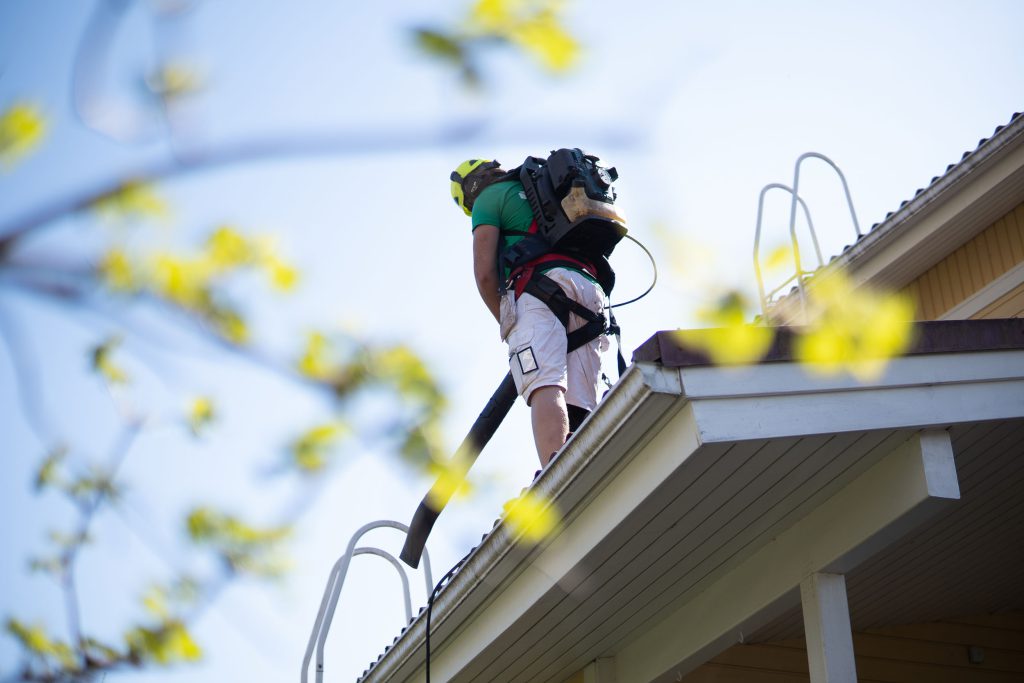
A metal roof should be inspected a couple of times a year and loose debris removed from the roof and gutters at the same time. When maintaining the roof, it is important to be careful with the metal roof surface, because scratches and dents easily cause rust damage to the metal roof. You can find more information about metal roof maintenance in our article How and when should a metal roof be maintained?