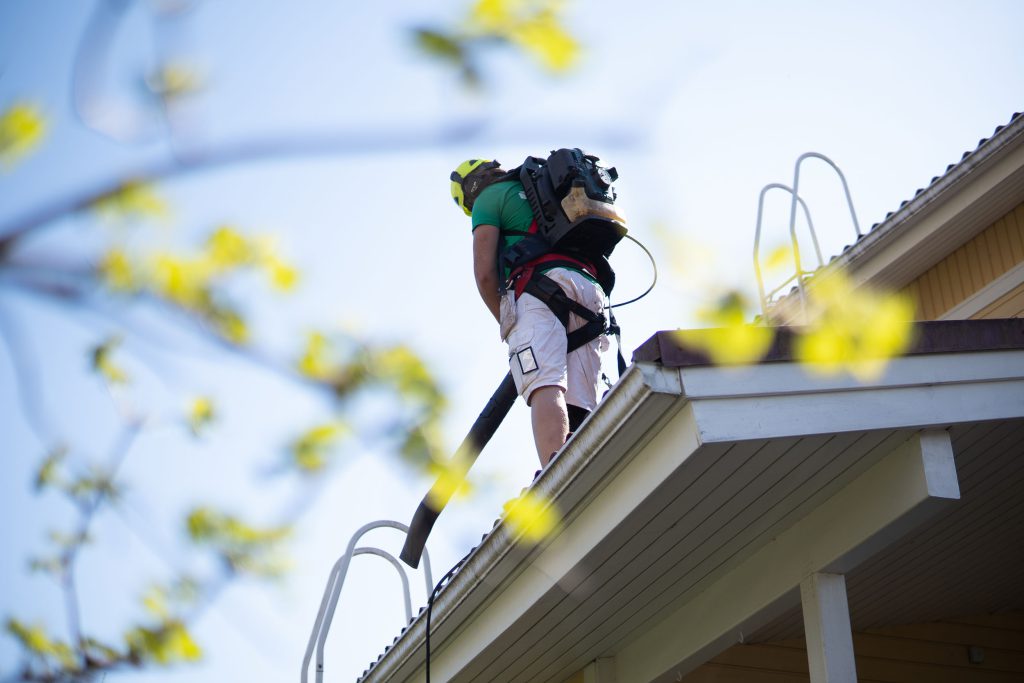
Finland is a land of thousands of lakes and countless cottages. Whether your summer retreat is a beloved shack without modern conveniences or a villa with all the trimmings, the exterior surfaces of your cottage need to be maintained: this keeps the cladding in good condition and helps you avoid costly renovations. If painting your cottage is now on the agenda and you prefer to do the work yourself, take note of these tips for cottage painters.
When is it worth painting a cottage?
Maintenance painting of a summer cottage typically becomes necessary every 10–15 years: the paint surface has worn thin or is flaking, and black spots may be visible on the surface. The longer you stretch the maintenance interval, the more groundwork the painting will require.
The best painting weather usually falls between May Day and Midsummer. Rain is often scarce during this period. Summer after Midsummer and often early autumn also offer good painting conditions, as long as you take humidity and weather forecasts into account.
Overcast weather is the best for painting, as the paint dries evenly and the result is a clean finish. Relative humidity should be below 80%. You can’t paint in rain, but if the relative humidity is below 80%, you can paint sheltered areas that the rain won’t reach if caught by a brief summer shower.
Read more about the effect of weather on painting in this article.
How do I choose the right paint?
Oil-based paint, water-based, red ochre… It’s easy to feel overwhelmed at the paint shelf. What type of paint should you choose to ensure painting your cottage goes smoothly?
The new paint must be compatible with the old one. If you get the paint choice wrong, it may show on the wall as early as next summer.
You can identify the old paint by examining a paint chip. An oil-based paint chip is hard, crumbles when bent, and feels chalky. Water-based paint, on the other hand, comes off in larger pieces than oil-based paint, sometimes in strips that flex when bent.
As a rule of thumb, you can paint over oil-based paint with water-based paint, but not the other way around. So if you’re choosing oil-based paint, make sure the old paint is not water-based.
A cottage painted with traditional red ochre paint is safest to repaint with the same type. You can identify red ochre by the fact that rubbing the surface leaves red pigment on your fingers, and the paint surface does not flake or crack.
If there are several buildings on the cottage property erected at different times—guest sheds, storage buildings, outhouses, and gazebos—the paint type may vary. So check the quality of the old paint separately for each building. The same paint may not necessarily be suitable for the different paint types on the buildings.
Pick up tips for choosing the right paint from this article.
What groundwork needs to be done when painting a cottage?
First work, then play. Before painting your cottage gets to the most enjoyable stage—the actual brushing—the groundwork must be done carefully. Groundwork includes cleaning the walls and removing poorly adhered paint.
Cleaning the walls is an important part of exterior painting work. If there are no mold spots on the walls, brushing the walls with a dry, soft brush is sufficient. Washing with water is not always necessary, as brushing effectively removes dust, soot, pollen, and other dirt stuck to the wall surface.
If the dirt is stubborn and dry brushing is not enough, you can use water and paint cleaning agent, such as Tikkurila Huoltopesu. If there are visible mold spots on the cottage walls, they must be removed and the wall treated with mold cleaning agent. Read more about washing exterior walls here.
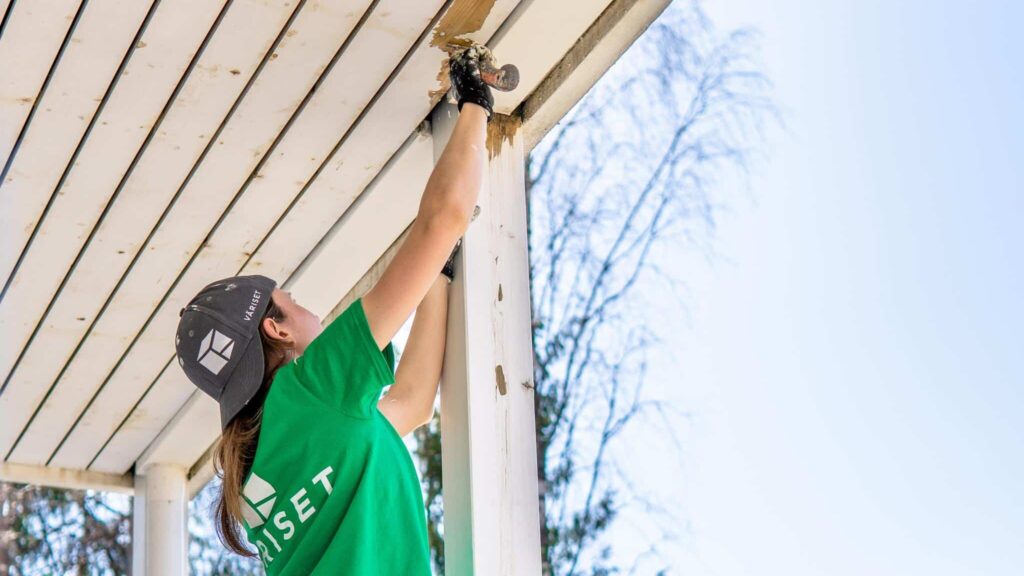
New paint adheres to the old. If the old paint is poorly adhered, the new paint surface will come off with it. That’s why flaking and poorly adhered paint must be removed. A paint scraper is most convenient for this. If there are multiple layers of paint, be careful that the edges of the scraped area don’t show through the new paint surface: a skilled painter makes the edge slightly beveled. Sometimes the scraped surface requires some sanding.
Areas exposed to bare wood are primed with diluted paint.
Where to get water for a cottage that relies on hauled water? Do I need scaffolding?
Many cottages rely on hauled water. If the exterior walls require washing with water, the thought of carrying water canisters can make you break out in a sweat. In principle, clean lake water can be used to help wash the walls, but it’s usually best to get clean tap water for washing. You can buy or rent a water tank if needed.
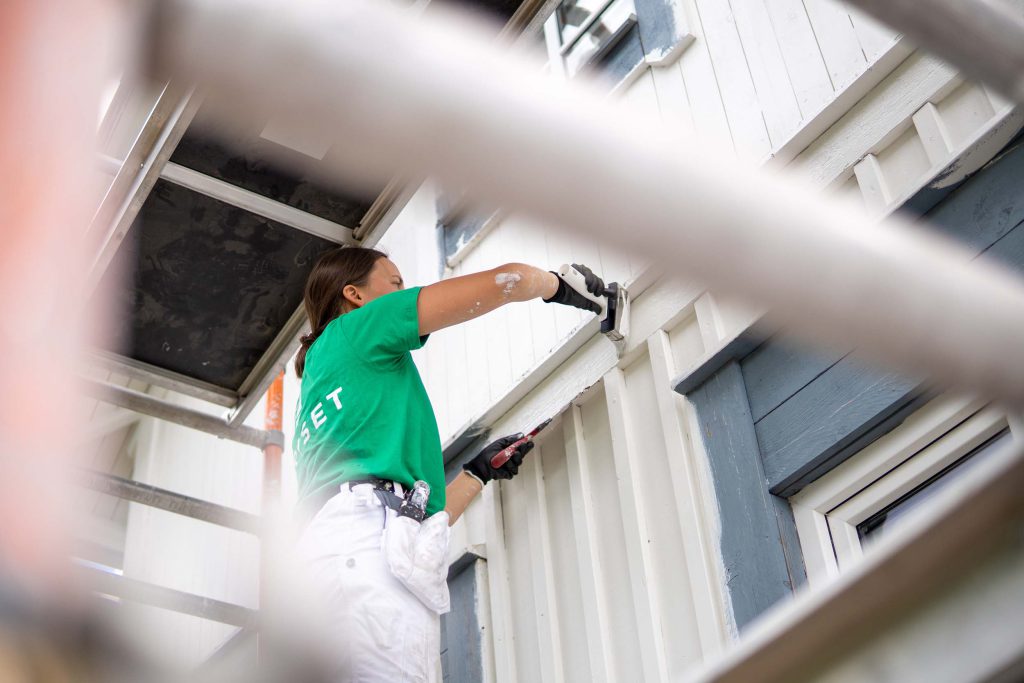
Is your cottage located on a slope, does the building have multiple stories? Sometimes arm’s length isn’t enough, and you need scaffolding for painting. You don’t always have to buy them, as scaffolding is convenient to rent for the duration of the painting work. Scaffolding is rented to business and private customers by, for example, Renta. Make sure the scaffolding is properly constructed so the work proceeds safely.
Get those brushes moving—remember these when painting
Once the groundwork is complete, it’s time for the actual painting: brushes in paint and off you go! Here are a few tips to make the painting work go smoothly.
It’s worth spending a moment planning the painting order. This way the work progresses smoothly and logically. When your tools are top-notch, painting the cottage goes smoothly. It’s also good to pay special attention to protection, and you should always protect more rather than less. It’s less trouble to set up protection than to try to remove paint splatters.
For protection, it’s convenient to use, for example, traditional tarp or construction plastic sold in rolls. If splatters occur, they’re easiest to wipe off immediately while fresh. The exception is windows, from which paint comes off most easily when dry.
You should always paint on the shaded side. This allows the paint to dry optimally. The best painting order is from top to bottom and large surfaces before accent color areas. Edge work can be done with a steady hand using a quality, stiff-bristled brush.
Also remember to take breaks and eat snacks—and drink water! Your head should be protected with a scarf or cap so sunstroke doesn’t catch you by surprise. At a lakeside cottage, a dip in the fresh water is an excellent way to refresh yourself on a painting day.
Checklist for cottage painters:
- The best painting weather is overcast
- Choose a paint type that is compatible with the old paint
- Check the old paint type on different buildings
- Rent painting scaffolding if needed
- Get water for washing work if needed
- Do careful groundwork, i.e., cleaning and scraping
- Protect the surroundings more rather than less
- Try to always paint on the shaded side so the paint can dry optimally
- Get good snacks, drink water, and wear a hat
- Enjoy seeing the work of your hands!
If you’d rather relax on the dock, we’ll gladly do the work for you. Request a free estimate visit: we’ll inspect the condition of the exterior surfaces and, if needed, provide you with a quote for the work.