Painting a Post-War House – 5 + 1 Tips for Success
Väriset
08.07.2021
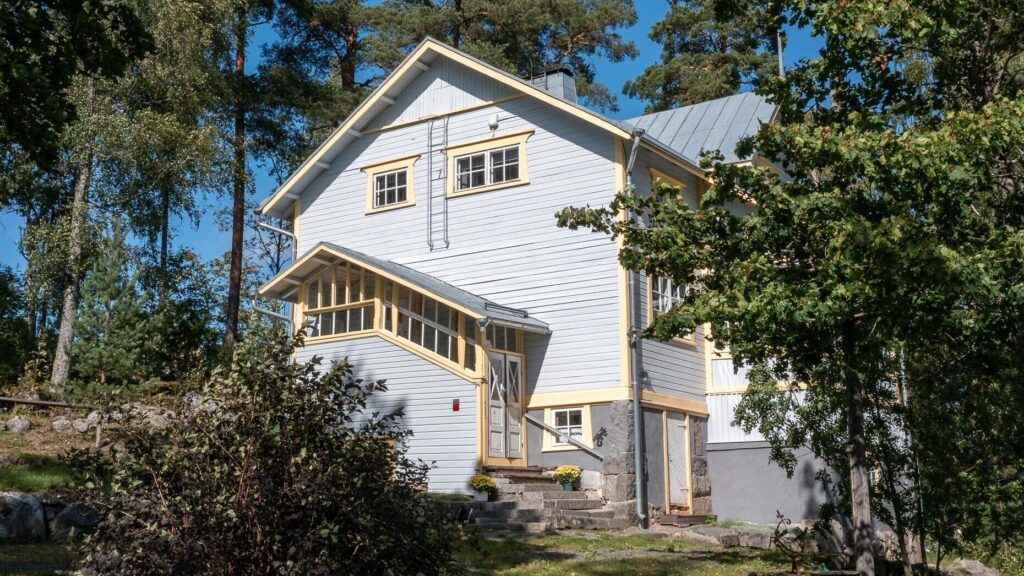
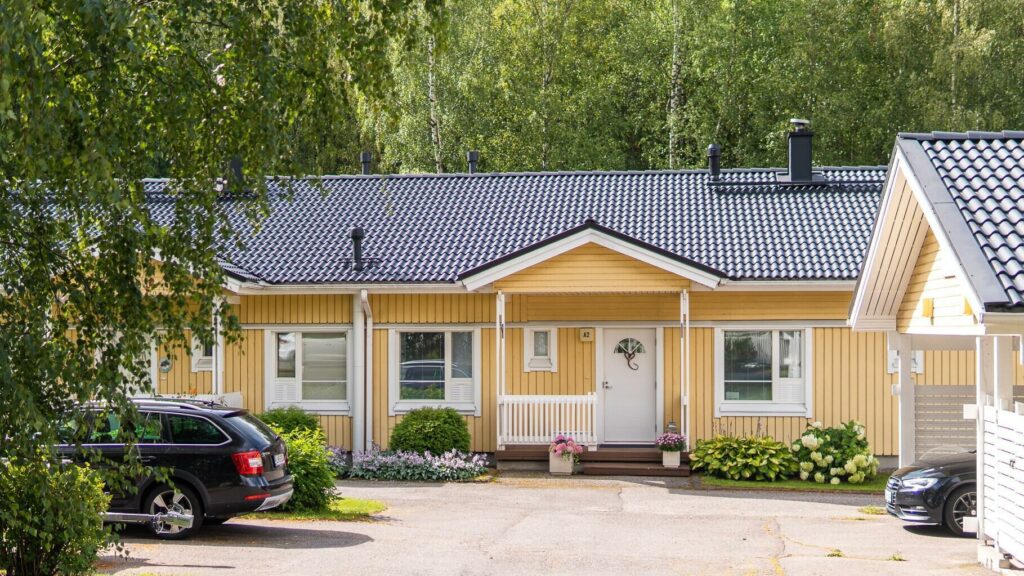
Painting a post-war house protects the exterior cladding, gives a fresh look, and increases your home’s value. Whether you’re facing a large-scale post-war house renovation or just a painting project, the job goes smoothly when you plan the work carefully and have the right tools at hand. Painting a post-war house doesn’t fundamentally differ from painting any other detached house, but there are a few things worth noting and keeping in mind. So here are five tips for you who are planning to paint a wood-clad post-war house – or for anyone considering painting wood cladding!
1. Estimate the Surface Area of the Wood Parts to Be Painted
Paint consumption is naturally affected by the surface area to be painted. Typically, the paintable surface area of a wood-clad post-war house is about 200–250 m2. For example, Tikkurila’s website has a handy calculator that makes estimating paint consumption easier.
When calculating surface area, you naturally need to account for areas that won’t be painted: these include, for example, doors and windows. The amount of paint is also affected by whether the surface is painted once or twice.
2. Condition of the Exterior Cladding and the Effect of Old Paint on Choosing New Paint
Now it’s time to dig into either your memory or the house maintenance book. How long has it been since the last painting? Are there any rotten boards in the cladding? Rotten boards should be replaced with new ones during the painting job. At Väriset, a carpenter will come and replace rotten exterior cladding parts with new ones if needed.
Incorrectly chosen paint type may flake and peel off as early as next summer.
Identifying the type of old paint is important so that the new paint surface is compatible. Incorrectly chosen paint type may flake and peel off as early as next summer. As a rule of thumb, you can paint over oil-based paint with water-based paint but not the other way around. Over red ochre paint, it’s recommended to paint only with red ochre or another boiled paint.
Old paint can usually be easily identified by examining a paint chip from the wall: an oil-based paint chip crumbles, while water-based paint is flexible and comes off in strips. Red ochre paints, on the other hand, release pigment when rubbed. Read more about identifying old paint and choosing the right paint here. You can read more about red ochre paint here.
3. Height of the Post-War House and Surrounding Terrain – Need for Scaffolding
When painting a two-story post-war house, arm’s length isn’t quite enough, so there’s a need for painting scaffolding. Different terrain features and, for example, trees and bushes also affect the need for scaffolding. Scaffolding can be purchased or rented from a scaffolding rental company. Väriset professionals always bring scaffolding and, if necessary, a personnel lift with them.
Quality scaffolding makes work faster and safer. When working on scaffolding, safety considerations are important. Always check the scaffolding assembly instructions.
4. Preparation Work
Preparation work is the foundation of a successful painting job: patience is therefore necessary. Preparation work includes cleaning the surface to be painted, mold prevention treatment, removing loose paint, and priming exposed wood surfaces.
If painting is done on a dirty surface, the result is likely paint detaching from its base prematurely. This may be visible immediately during painting as poor paint adhesion, but more likely the problem will appear only somewhat later. We don’t recommend using a pressure washer to clean the house, especially not when it’s a post-war house without ventilation gaps.
If painting is done on a dirty surface, the result is likely paint detaching from its base prematurely.
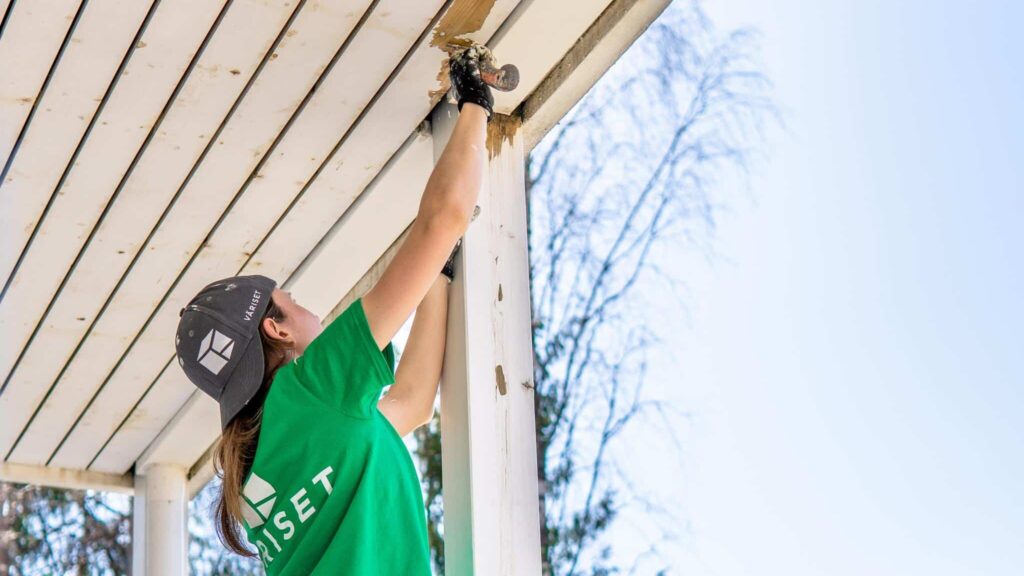
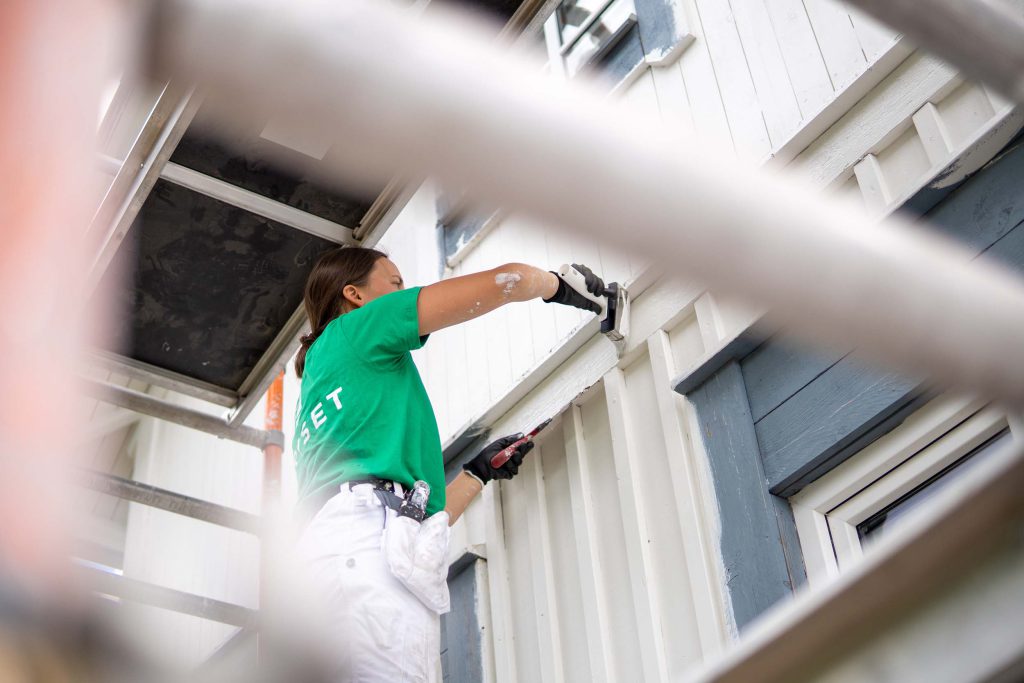
Poorly adhered paint comes off best with a paint scraper. Old, poorly adhered paint must be removed, as the new paint surface will peel off along with it – new paint doesn’t work like glue, but detaches from the wall along with the old paint. Strokes should be made parallel to the board and across the full width of the blade.
Exposed wood surfaces are primed. Priming improves the adhesion and hold of the topcoat and enables an even color result. Priming is usually done with topcoat diluted by about 10 percent.
You can read more about washing exterior walls here and removing old paint here.
5. And Paint on the Surface – Let the Painting of the Post-War House Begin!
Finally, we’re at this stage! It’s time to dip the brush and apply paint to the surface. Remember to consider the right kind of painting weather: very high humidity or cold spring days are not optimal for exterior painting. Instead, warm overcast weather is the best weather for a painter.
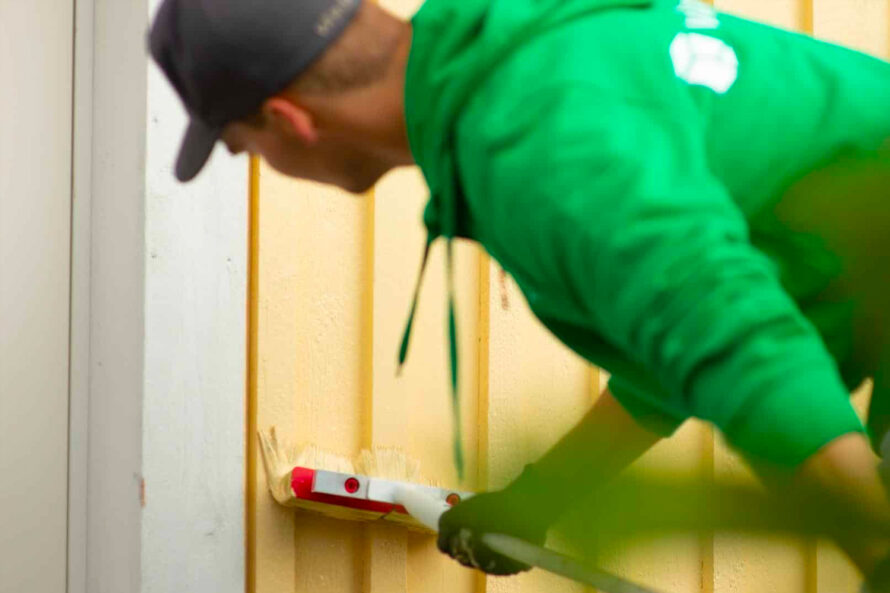
With the right tools, the work becomes easier. Painting a post-war house is a project of such scale that you shouldn’t skimp when choosing tools. When painting the exterior walls of a house, an extension pole allows you to reach a large surface area, and a so-called double brush speeds up the work. Well-done masking makes the job more carefree.
+ 1 Comment from Väriset’s Foreman:
“In painting work, you should proceed from top to bottom and always paint on the shaded side: in scorching sun, the paint doesn’t dry optimally, and it may show on the surface next summer. Painting a post-war house is usually pleasant work, as the surface area to be painted is easy surface. Enjoy seeing the results of your handiwork!”
Is painting a post-war house on the agenda? We’re happy to do the job for you. Invite us for a free assessment visit, where our expert will check the condition of your home’s exterior surfaces.
Fall in love with your home again – See our services
House Painting
Fall in love with your home again - restore your home's appearance and value
Exterior house painting restores your home's appearance and value. Flawless workmanship is of utmost importance to us. We always ensure that the final result is even and perfectly finished.
Timely roof maintenance extends your roof's lifespan by decades
An intact, maintained, and painted roof is every home's most important protection. Tile roof coating and maintenance services as well as metal roof painting services as turnkey solutions.
Take advantage of the household deduction – up to €3,200 benefit from the work. Try the calculator
The household deduction in 2026 is 35% of the VAT-inclusive portion of the work performed. The deductible is €150. The benefit is €1,600 per person, meaning the maximum deduction for a couple is €3,200 in total
Order a free survey visit to your home. You'll receive an assessment of maintenance needs and a quote for the work. Book a survey or calculate a price estimate with our calculator in just a few minutes.
Ostrobothnia, South Ostrobothnia, Central Finland, Central Ostrobothnia, North Ostrobothnia, Lapland, Kymenlaakso, Päijät-Häme, South Karelia, South Savo, Kainuu
Perttu Aunio
Regional Manager
Southwest Finland
Subscribe to the newsletter and win a roof maintenance service (value €349)
The Väriset newsletter provides home maintenance tips for homeowners, along with benefits and special offers. Subscribe to the newsletter and enter the monthly roof annual maintenance draw.
We operate throughout Finland
Shall we get started?
Ask for more information or request a quote. We'll respond by the next business day at the latest.