Coating a Tile Roof Yourself – Can the Job Be Done Independently?
Väriset
31.07.2026
When a tile roof begins to show signs of wear, many homeowners consider coating their tile roof. An important question that often arises is, can you paint a tile roof yourself?
Coating a tile roof yourself is possible, but in practice the job involves much more than simply applying a new coat of paint. A successful result requires both careful preparatory work and selecting the right materials.
In this article, we will review when coating a tile roof yourself may be possible, what the job practically requires, and in what situations using a professional is often a safer and more cost-effective solution.
Lue tiivistelmä
Coating a tile roof yourself is possible if the roof is in good condition, safely accessible, and the worker has sufficient time and expertise.
The majority of the job’s success is determined in the preparatory work done before the actual coating.
Steep roofs, extensive moss growth, and damaged roof tiles are situations where using a professional should be considered.
Washing and coating a tile roof yourself require the right tools, safety equipment, and suitable weather conditions.
Mistakes in washing, drying, or coating can significantly shorten the coating’s lifespan.
Can You Coat a Tile Roof Yourself?
In principle, you can coat a tile roof yourself, but successful completion requires careful preparation and proper work methods.
Tile roof painting consists of several work stages, each of which affects the durability of the final result. The roof must first be inspected, cleaned, and treated before applying the actual tile roof coating. If any work stage is incomplete or performed incorrectly, the new coating will not adhere properly and will not achieve its intended lifespan.
Independent work is easiest to carry out when the roof is gently sloped, in good condition, and easily accessible. The more challenging the project becomes, the more important safety, experience, and proper tools become.
When Should You Not Coat a Tile Roof Yourself?
Althoughcoating a tile roof yourself is possible, there are also situations when roof work is not advisable to do yourself. Among other things, the roof’s size, steepness, and condition significantly affect how safely and successfully the work can be carried out.
Usually the biggest challenges are not related to the painting itself, but to assessing the roof’s condition, working safely, weather conditions, and selecting the right work methods. If the roof shows signs of advanced wear or working conditions are challenging, using a professional can save both time and unnecessary costs.
Next, we will review situations where tile roof coating should generally be left to a professional.
A Steep Roof Requires More Than Ladders and a Paint Sprayer
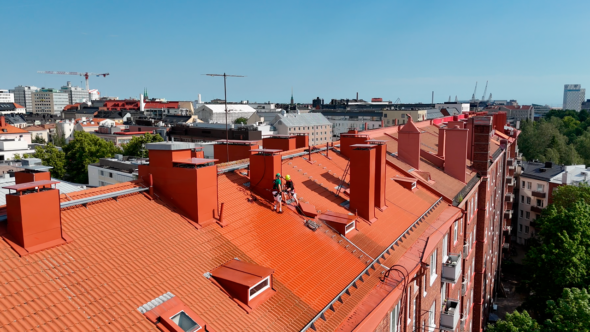
Working on high and steep roofs always involves safety risks. Tile roof washing makes the surface slippery, and a safety risk arises when moving on the roof with a washer, sprayer, and other tools.
Professionals have access to appropriate safety equipment, anchor points, and work methods that enable safe work even on challenging projects. The steeper the roof, the more experience matters.
Crumbling Tile Requires Proper Work Methods
Not all tile roofs are structurally in the same condition during renovation as when new. If the tile surface has become brittle over the years, vigorous washing or careless movement can damage them.
Before coating, it would be good to assess whether the tiles are still in sufficiently good condition to be coated. A professional can identify possible deterioration, cracks, and other damage before tile roof painting, thereby avoiding situations where the roof would need more extensive repair instead of coating.
Abundant Moss May Indicate Deeper Wear
Should moss be removed from a tile roof? Yes, because moss is not merely a cosmetic issue. Often heavy moss growth indicates that the tile’s original protective surface has worn away and the roof is absorbing more moisture than before.
In such situations, merely washing and coating the tile roofmay not necessarily solve all problems. Before starting the work, it is advisable to ensure that the tile roof is still structurally in good condition and suitable for coating. This avoids unnecessary costs and ensures that the coating provides the longest possible benefit.
What Tools Does Coating a Tile Roof Yourself Require?
Tile roof coating is a project that requires both knowledge and skill. In addition to the new coating, tools are needed for safely inspecting, cleaning, and painting the roof. In practice, each work stage builds on the previous one, because without safe working conditions washing cannot be done, without thorough washing the coating will not adhere properly, and without the right painting tools the result may be uneven.
Next, we will review the most important tools that tile roof cleaning and coating generally require.
Safety Equipment Is the Most Important Starting Point for the Work
In tile roof painting, safety is not a separate work stage, but a prerequisite for doing the entire job. You work at height on the roof, often on a sloped surface, and especially during washing the tile becomes extremely slippery. Therefore, attention should be paid to safe working before the very first washing or painting stage.
The Roof Requires Sturdy Ladders and Fall Protection
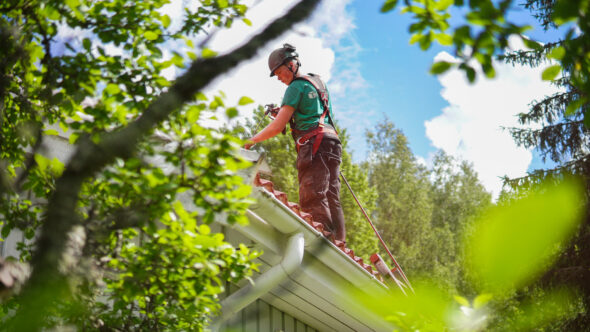
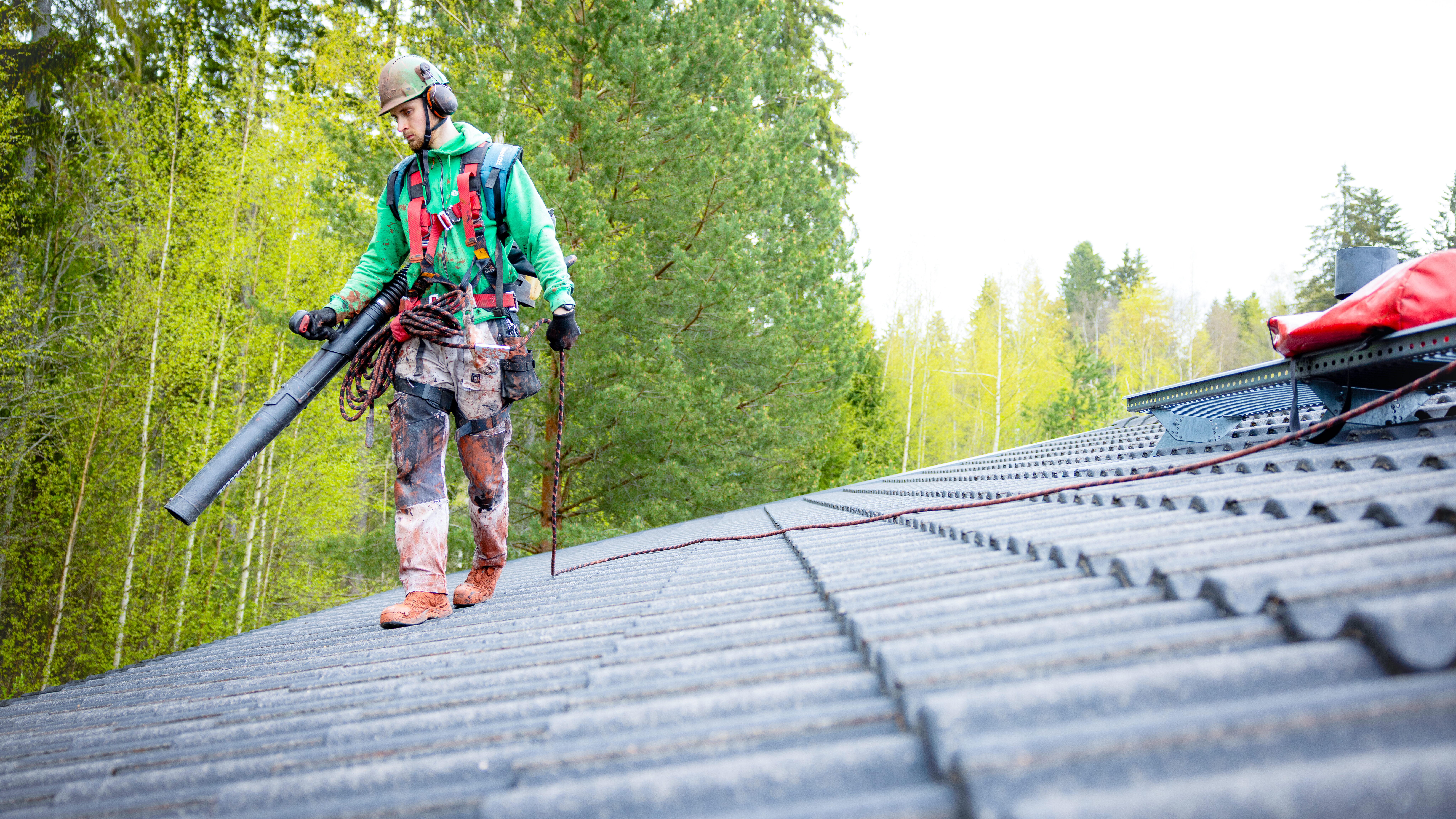
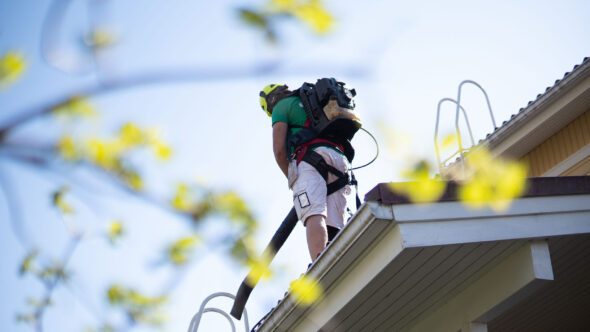
Safety harnesses, anchor points, roof walkways, and sturdy ladders are basic tools for safe roof work. They ensure safe movement on the roof and reduce the risk of falling, especially when working on a wet or steep roof surface.
Tile Roof Washing Requires the Right Pressure and Technique
Before coating, dirt, moss, algae, and other growth are removed from the roof. Tile roof cleaning is one of the most important stages of the work, because the new coating will only adhere properly to a correctly treated surface. At the same time, washing reveals any damage to the roof surface.
However, excessively vigorous washing can damage the tile surface, while washing that is too gentle leaves impurities under the coating. Therefore, it is important in washing to use the right pressure and work methods appropriate for the roof’s condition.
Washing Requires a Pressure Washer and Growth Control Agent
A pressure washer removes dirt, moss, and other growth from the tile surface. A growth control agent applied to the roof after washing helps slow the renewal of moss, algae, and lichen in coming years.
Painting Tools Are Selected According to the Roof’s Size and Shape
After cleaning, the work moves to the actual coating work, where the importance of the right tools is emphasized. Different roof types place different requirements on the work, which is why work methods may also vary depending on the project.
With the right tools, the coating can be applied evenly across the entire roof surface. This directly affects the final result’s coverage, appearance, and lifespan, because the goal is to form a uniform protective layer on the roof without areas that are too thin or thick.
Coating Requires Suitable Tile Roof Paint or Tile Roof Coating
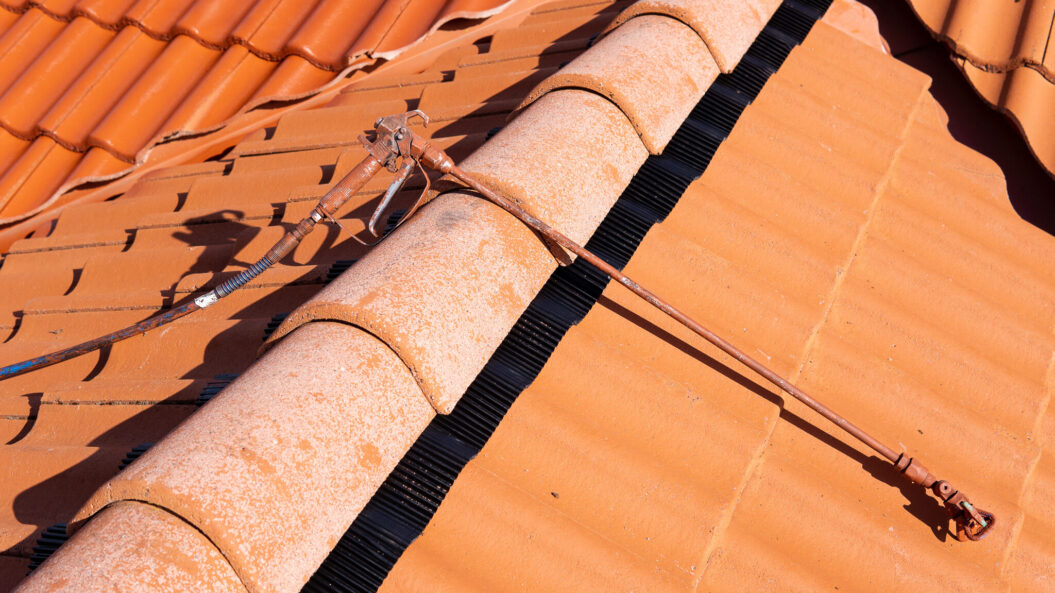
The tile roof is coated first with thinned primer and then with the actual tile roof paint. Edges and details are treated with a brush, while larger roof surfaces are painted with a sprayer to achieve an even result.
How Does Tile Roof Washing and Coating Progress Step by Step?
Tile roof cleaning and coating is a multi-stage job where the quality of the final result is largely built on thoroughness. Although attention is often focused on the actual painting stage, most of the work time is spent on preparatory work and coating preparation. Well-executed preparatory work stages affect the final result at least as much as the painting work itself.
How Is a Tile Roof Painted? A typical work sequence proceeds as follows:
From the list, you can see that the actual painting is only one part of the whole. Careful preparatory work creates the foundation for a durable final result and helps ensure that the new coating protects the roof for as long as possible.
What Is a Tile Roof Coated With?
The tile roof is coated with tile roof paint designed for this purpose, which forms a new protective layer on the roof tile surface. The coating’s function is to reduce moisture absorption, slow moss growth, and protect the tile from the stress caused by Finland’s variable weather conditions.
We at Väriset primarily use Tikkurila Kilpi Tile Roof Paint, which is designed specifically for coating concrete tile roofs. The paint offers excellent weather resistance, good color retention, and long-lasting protection for roof tiles.
However, it should be noted that even the best tile roof paint cannot replace well-executed preparatory work. When the whole works together, a new tile roof coating helps keep the roof drier, cleaner, and functional for decades.
What Mistakes Should You Avoid in a DIY Tile Roof Painting Project?
Painting a tile roof yourselfcan succeed well when the work is done in the correct order and the roof’s condition is considered before the very first washing or painting stage. The most common problems do not arise during the actual coating, but much earlier in the work preparation stage.
Many mistakes go unnoticed at first and are only revealed after years. The roof shows symptoms through premature coating wear, flaking, or rapid renewal of growth. Therefore, careful preparatory work, proper work methods, and suitable weather conditions are as important as the coating itself.
The table below lists the most common mistakes and their possible consequences.
Common Mistake
Possible Consequence
The roof is coated before it has dried properly
The coating does not adhere properly and the lifespan is shortened
Moss, algae, or dirt remains on the tile surface
Growth may continue to spread under the coating
Washing is done with too much pressure
The tile surface may wear or become damaged
Wrong tile roof paint or coating is selected
The coating may flake, fade, or wear prematurely
Primer application is not done
Adhesion weakens and the durability of the result suffers
Work is done in too humid or cold weather
Drying and coating adhesion may fail
The roof’s condition is not checked before starting work
Possible damage remains hidden under the coating
How Much Does Coating a Tile Roof Yourself Cost?
What is the tile roof coating price if you do the work yourself? An exact sum is difficult to estimate, because costs depend on the roof’s size, materials used, and how many necessary tools are already available.
Many households lack, for example, a pressure washer, paint sprayer, and safety equipment suitable for roof work, in which case costs arise from purchasing and renting equipment. Additionally, the budget should include growth control agents, tile roof paints, protective materials, and other supplies needed during the work.
When considering tile roof painting price, the quality of the work should also be taken into account. If the work is done inadequately, new maintenance or coating may become necessary sooner than expected. In a project carried out by a professional, on the other hand, the price includes proper work methods, quality materials, and a warranty for the work done.
How Long Does Coating a Tile Roof Take When Done Yourself?
Painting a tile roof yourself typically takes from days to weeks. For a professional, the work is completed in a few days, but when done yourself, significantly more time should be allocated for the project.
As the project progresses, people are often surprised by how small a portion of the total time is spent on the actual painting. The largest amount of work relates to inspecting, cleaning, maintaining the roof, roof drying, and coating preparation. Weather conditions also significantly affect the schedule, because both washing and painting require suitable conditions to succeed.
People often wonder how long tile roof washing and coating take when done yourself. On a small and well-maintained roof, the work may be completed in days, but on a large or heavily moss-covered roof, the project can stretch to several weeks.
Therefore, before starting work, it is advisable to realistically assess both the required amount of work and your own available time.
Why Should You Order Tile Roof Coating from Väriset?
In tile roof coating, the final result is largely determined before the actual painting. Therefore, assessing the roof’s condition, proper work methods, and careful preparatory work are as important as the coating itself.
We at Väriset have carried out thousands of tile roof cleanings, maintenance projects, and coatings throughout Finland. Before starting work, we assess the roof’s condition, check for possible damage, and select methods and materials appropriate for the roof’s needs.
When the work is done by a professional, you do not need to worry about safety, weather conditions, or selecting the right products. You get a roof whose condition has been carefully assessed and whose coating has been done with the roof’s lifespan in mind.
If you are considering tile roof coating, contact Väriset and book a free assessment visit.
Fall in love with your home again – See our services
House Painting
Fall in love with your home again - restore your home's appearance and value
Exterior house painting restores your home's appearance and value. Flawless workmanship is of utmost importance to us. We always ensure that the final result is even and perfectly finished.
Timely roof maintenance extends your roof's lifespan by decades
An intact, maintained, and painted roof is every home's most important protection. Tile roof coating and maintenance services as well as metal roof painting services as turnkey solutions.
Take advantage of the household deduction – up to €4,200 benefit from the work. Try the calculator
The household deduction in 2026 is 40% of the VAT-inclusive portion of the work performed. The deductible is €150. The benefit is €2,100 per person, meaning the maximum deduction for a couple is €4,200 in total
Order a free survey visit to your home. You'll receive an assessment of maintenance needs and a quote for the work. Book a survey or calculate a price estimate with our calculator in just a few minutes.
Ostrobothnia, South Ostrobothnia, Central Finland, Central Ostrobothnia, North Ostrobothnia, Lapland, Kymenlaakso, Päijät-Häme, South Karelia, South Savo, Kainuu