Tile roof coating – guide: when, how, and whether you can do it yourself
Väriset
11.02.2020
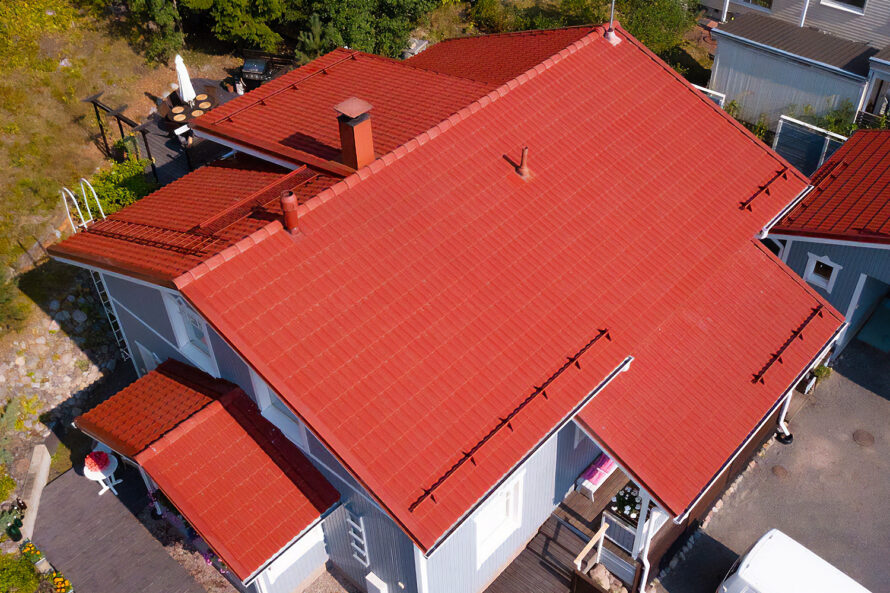
Tile roof coating restores a protective surface to worn tile that repels water, dirt, and moss. Once the factory-applied coating has worn away, the tile starts absorbing moisture, develops moss more easily, and deteriorates in frost. Coating done at the right time can extend the roof’s lifespan by 10–20 years.
In this guide, we’ll explain the signs that indicate a need for coating, how the work is done step by step, the difference between paint coating and protective treatment, and whether you can coat a tile roof yourself. If you’d like the work done for you, order tile roof coating from Väriset.
Lue tiivistelmä
Apply coating when the tiles are still intact but the surface has faded, become rough, or started absorbing water.
Washing alone removes moss but doesn’t restore a worn protective surface.
Paint coating lasts 10–15 years, while a clear protective treatment lasts 5–7 years.
Most of the success comes down to the preparatory work: inspection, washing, drying, and growth inhibitor treatment.
A steep roof, one with extensive moss, or one made of crumbling tiles is best left to a professional.
New concrete tiles come with a factory-applied coating. Sun, rain, snow, and temperature changes wear it down over the years, and bare tile is porous. Coating closes the pores again and restores an even color to the roof.
Coating Reduces Water Absorption
On a coated roof, water beads up and runs off instead of soaking into the tile. The roof dries faster after rain, and the structures are subjected to less moisture stress.
Coating Protects the Tile from Frost Deterioration
Water absorbed into the tile expands when it freezes and damages the tile’s surface. When less water is absorbed, freeze–thaw cycles wear down the tile more slowly. An untreated tile roof can deteriorate up to twice as fast as one that’s regularly maintained.
The Roof Surface Stays Clean More Easily
Dirt, pollen, algae, and moss stick less easily to a smooth surface than to a rough one. The roof stays clean longer, and the next wash is easier.
Roof Painting – When Is a Tile Roof Coated?
A tile roof is coated once the tiles are structurally sound but their protective surface has worn away. In most cases, this means a roof that’s 10–15 years old, but age alone isn’t decisive. The need for coating develops gradually, and it’s the combination of several signs that matters.
1. The color has faded
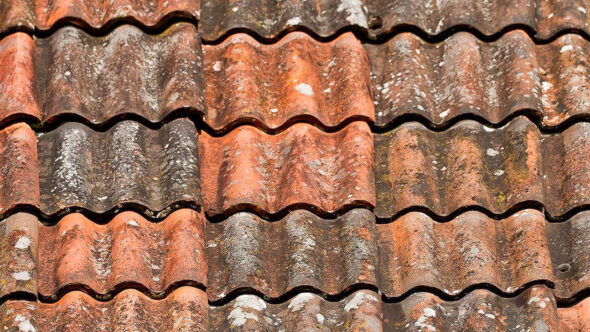
UV radiation, rain, and snow wear down the coating over the years. Fading is often the first visible sign that the protective surface is thinning.
2. Water absorbs into the tile
On a roof that’s in good condition, water beads up. If the tile darkens in the rain and dries slowly, the protective layer has worn away and the tile is starting to absorb moisture.
3. Moss or other vegetation grows on the roof surface
Porous tile is a good growing surface for moss and algae. Moss is usually a result of moisture retention, not its cause. If moss returns quickly after washing, the surface needs coating. Read also how moss removal from a tile roof is done.
4. The tile surface is rough
A rough surface indicates that snow, ice, and water have worn down the surface layer. Dirt and moss stick more easily to a rough surface, which increases moisture retention.
5. Ensure that the tile is intact
Coating is only worthwhile if the tile is still durable. If the tile is crumbling, cracking, or softening, coating won’t be enough, and a larger repair may be needed.
Why should a tile roof be coated before damage occurs?
Coating extends the roof’s lifespan, but it doesn’t fix a damaged roof. When coating is done in time, the tiles stay in good condition and a roof renovation is pushed years further into the future.
When is tile roof washing no longer sufficient?
Washing removes dirt and moss but doesn’t restore a worn protective surface. If the roof is still rough, absorbs water, or becomes mossy again quickly after washing, it’s worth coating.
Action
When
Washing and growth inhibitor treatment
Surface is intact, roof has dirt or moss
Washing and protective treatment
Factory coating is still mostly intact
Washing and paint coating
Surface is faded, rough, or absorbs water, tiles intact
Roof renovation
Tiles are crumbling, or the underlay or structures are damaged
What weather is suitable for roof painting?
The roof is painted in dry weather, when the temperature is high enough and humidity is moderate. The best time is usually between spring and autumn, when the washed roof and paint have time to dry properly. Cold or damp weather weakens adhesion and can cause the paint to flake.
How does roof location affect the timing of coating?
In an open, sunny location, UV radiation fades the roof faster. On a wooded plot, the roof collects moisture and growth. That’s why two roofs of the same age can be in very different condition, and the right timing is best determined with a free survey.
How Is Tile Roof Coating Done?
Tile roof coating proceeds in nine stages. Most of the working time goes into preparatory work, not the painting itself, and every stage affects how well the coating adheres and how long it lasts.
1. The house and yard are protected
The walls are protected with a tarp hung from the eaves so that the wash water runs away from the house. Terraces are protected, patio furniture and cars are moved away, and plantings next to the walls are covered, since the growth inhibitor can also harm ornamental plants.
2. The roof’s condition is checked
Before washing, the ridge, roof penetrations, underlay, and tiles are inspected. This reveals whether the roof is suitable for coating or whether repairs are needed first.
3. Broken tiles are replaced
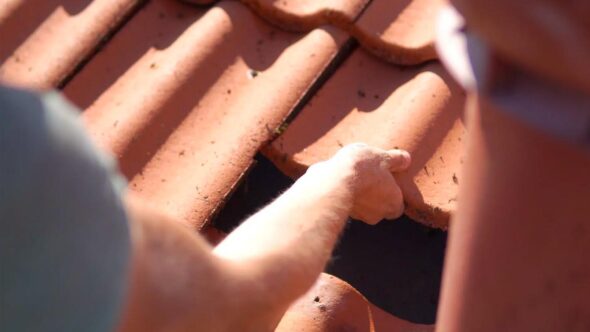
Coating doesn’t fix a cracked tile, so broken tiles are replaced. Where a tile is broken, water reaches the underlay. Finding a matching replacement tile for older roofs can be difficult, since tile profiles have changed over the years. Read more about replacing roof tiles.
4. The roof is thoroughly washed
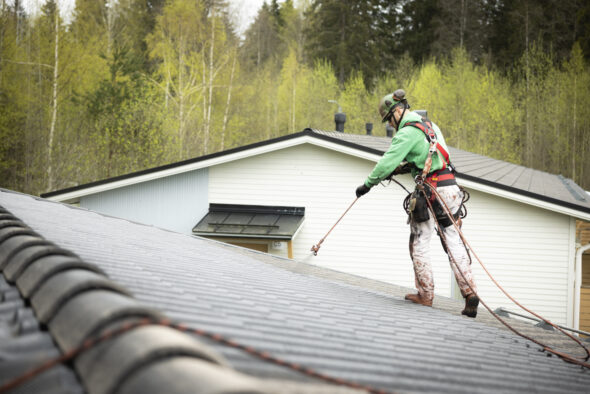
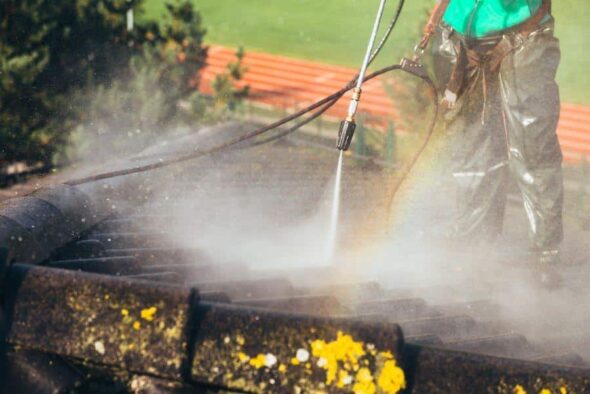
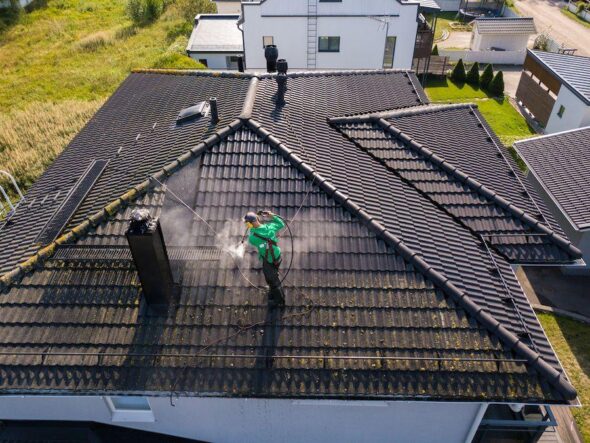
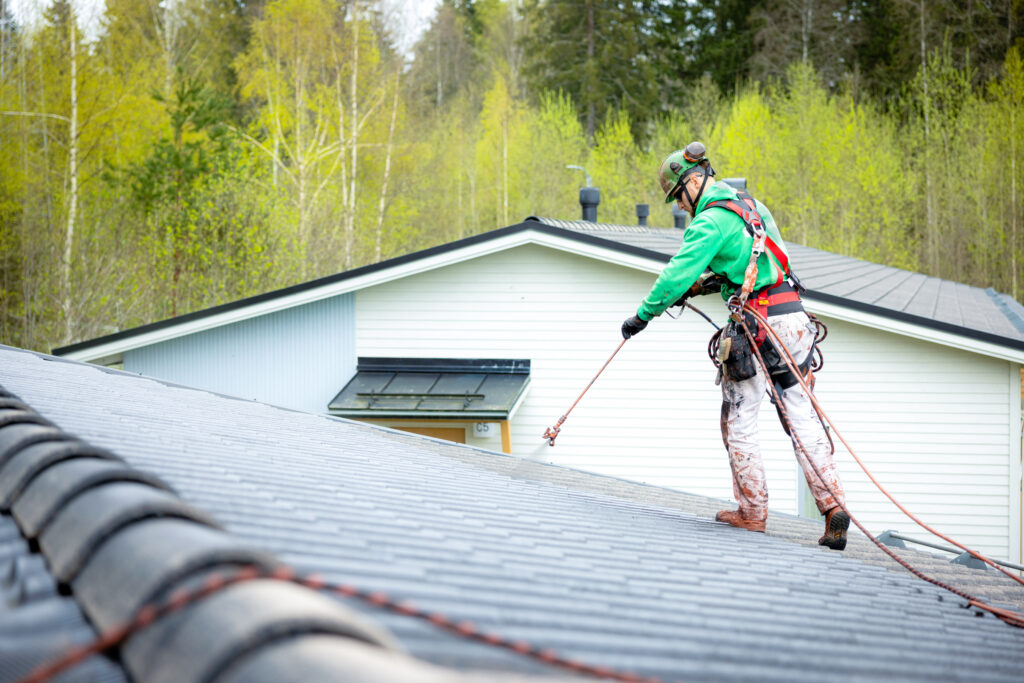
Coating only adheres to a clean surface. The roof is washed with a professional-use pressure washer, moving downward in the direction of the tiles so water doesn’t get underneath them. Read more about how washing a roof before coating is done.
5. Moss and growth are removed
After washing, any remaining moss and other growth are removed so the coating can adhere to the entire surface.
6. Growth inhibitor is applied to the roof
Once the roof has dried, a growth inhibitor is applied. It’s left to work according to the manufacturer’s instructions, for at least overnight, and is not rinsed off.
7. Edges and details are painted by hand
The edges, tile ends, and chimney flashings are painted with a brush. This also prevents paint splatter on the walls beneath the eaves.
8. The roof is primed with thinned tile roof paint
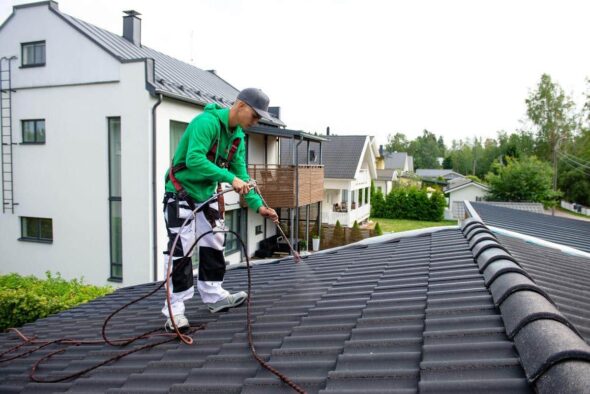
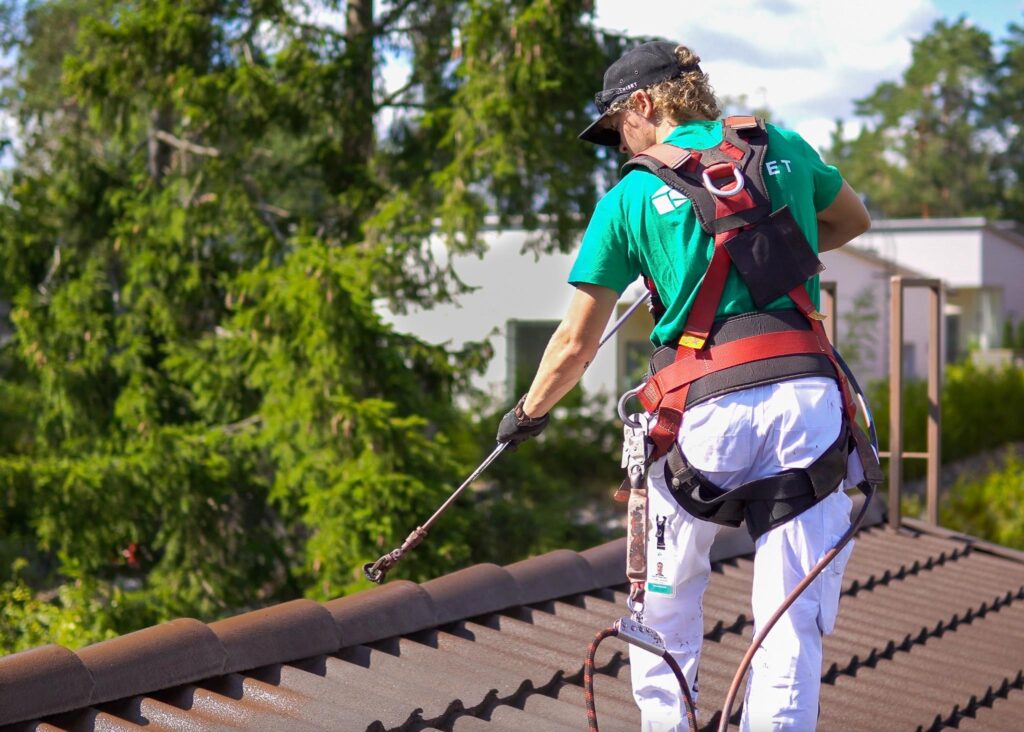
The primer is usually surface paint thinned by 10–20 percent, which soaks into the tile’s pores and improves the surface paint’s adhesion. The paint is applied with a sprayer, which gives the most even result.
9. Surface paint is applied and the site is cleaned up
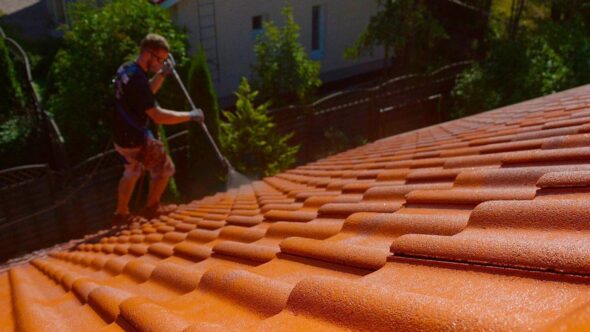
The surface paint is applied undiluted over the entire roof. Finally, the result is inspected, the protective coverings are removed, and the yard is cleaned. A clear protective treatment is done the same way, but without priming.
Safety on the roof
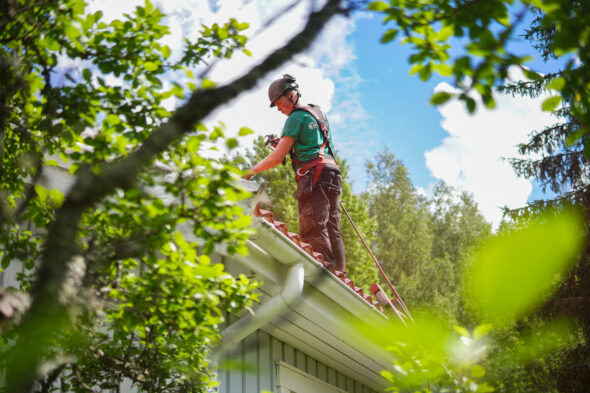
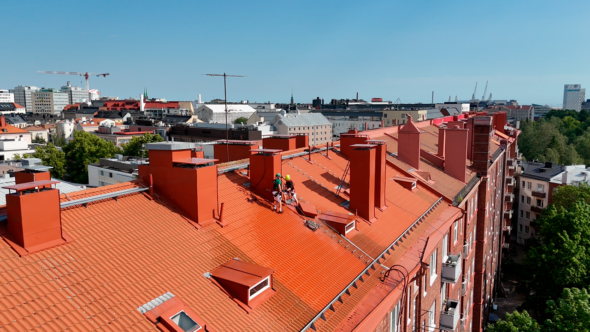
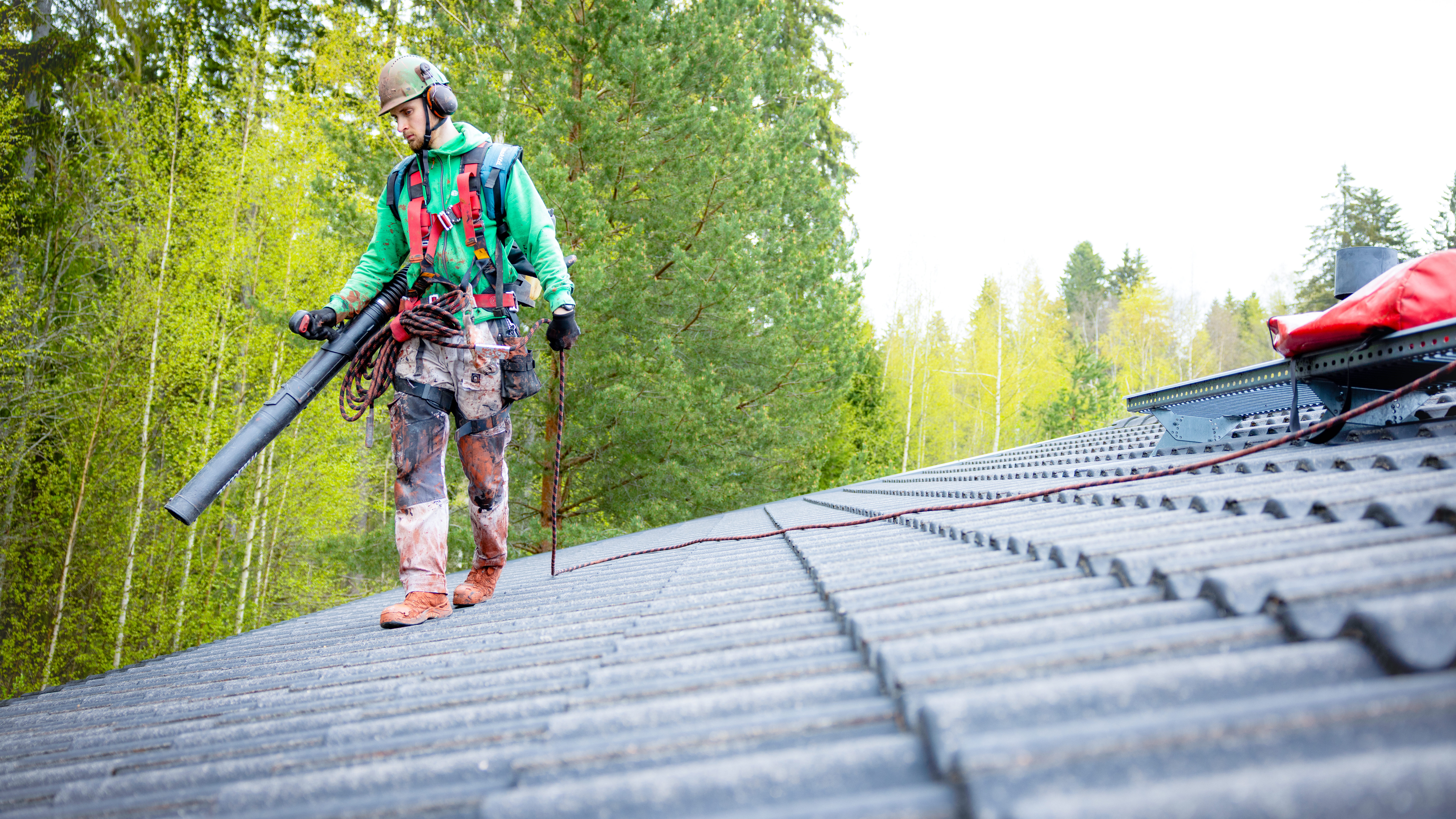
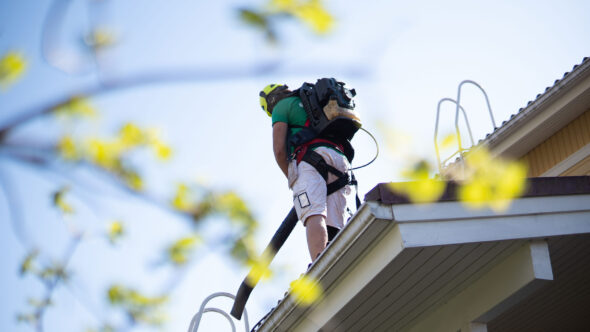
Wet tile is slippery, so a safety harness and anchor points are always used on the roof. On a roof in poor condition, step near the ends of the tiles, not the middle.
Watch the video to see how Väriset’s professionals coat a tile roof.
Tile Roof Cleaning and Protective Treatment – Should I Do It Myself or Hire a Professional?
Paint coating is renewed approximately every 10–15 years and clear protective treatment every 5–7 years. Below, we review the treatment options and what doing the work yourself requires.
What Does Tile Roof Protective Treatment or Paint Coating Mean?
Protective treatment usually means a clear coating that makes the tile surface repel dirt and water without changing its appearance. Paint coating is a colored coating that gives the roof an almost factory-new surface and a uniform color. With paint coating, you can also change the roof’s color.
When Should a Tile Roof Be Treated?
A clear protective treatment gives the best result when the roof is 10–15 years old and most of the factory coating is still intact. It can also be done on an older roof, but the color won’t even out in that case. If the coating has worn away over a large area and you want the roof to look new, choose paint coating instead.
Tile Roof Cleaning
Before coating, the roof is washed with a pressure washer that has sufficient water volume and suitable pressure. Pressure washing can loosen poorly adhering factory coating, so if the roof isn’t going to be coated right after washing, it’s best cleaned by brushing instead. You’ll find all cleaning methods and prices in our tile roof washing guide.
How Is Tile Roof Protective Treatment Done?
Protective treatment is done in the same stages as paint coating: washing, replacing broken tiles, growth inhibitor treatment, and at least an overnight dwell time. After that, the clear coating is applied with a sprayer, brush, or roller. No priming is needed, and the most even result is achieved with a sprayer.
Paint Coating or Protective Treatment?
The choice depends on how much of the factory coating remains and whether you want a new color for the roof.
Paint coating
Protective treatment
Example product
Tikkurila Kilpi Tile Roof Paint
Tikkurila Kilpi Pro Block
Result
New colored surface, color can be changed
Colorless, appearance unchanged
Suitable for
Worn coating, intact tiles, underlay, and structures
Factory coating still good, roof usually under 15 years
Clay tile roof
Not suitable
Suitable
Protection lifespan
10–15 years
5–7 years
Application
Two coats with a high-pressure sprayer
One treatment
Price
More labor-intensive and costlier
More affordable
Paint Coating (For example, Tikkurila’s Kilpi Tile Roof Paint)
On concrete tile roofs, Väriset primarily uses Tikkurila’s Kilpi Tile Roof Paint. It forms a protective layer on the tile that reduces moisture absorption and slows down moss growth. However, even a good paint can’t replace careful preparatory work.
Protective Treatment (For example, Tikkurila’s Kilpi Pro Block)
Kilpi Pro Block also protects porous or worn tile, but doesn’t create a new surface on it. It’s a good option for a clay tile roof, which isn’t paint-coated.
DIY Tile Roof Coating
Can You Coat a Tile Roof Yourself?
You can, if the roof is low-pitched, in good condition, and easy to access, and you have the time, the right tools, and the skills. The biggest challenges aren’t related to painting itself, but to assessing the roof’s condition, working safely, the weather, and using the right methods.
When is it not worth coating the roof yourself?
A steep roof. Washed tile is slippery, and moving around at height with a pressure washer and sprayer increases the risk of falling.
Crumbling tile. Brittle tile breaks easily under hard washing or careless movement.
Heavy moss growth. Extensive moss growth often indicates deeper deterioration, and the roof’s condition needs to be assessed before coating.
What tools do you need?
Safety harness, anchor points, roof walkways, and sturdy ladders
A professional-grade pressure washer: a household washer’s pressure and water volume aren’t sufficient (a powerful washer can be rented)
Growth inhibitor and a backpack sprayer to apply it
A paint sprayer for large surfaces and brushes for edges
Tile roof paint or a clear protective treatment agent, plus protective coverings
Coatings intended for professional use aren’t always available at hardware stores, but some manufacturers also sell them to consumers.
Most Common Mistakes in DIY Coating
Mistake
Consequence
The roof is coated before it has dried
Coating doesn’t adhere, lifespan is shortened
Moss, algae, or dirt is left on the tile
Growth continues spreading beneath the coating
Washing with too much pressure
The tile surface wears down or gets damaged
Wrong paint or coating
Flaking, fading, premature wear
Priming is skipped
Poor adhesion
Work is done in damp or cold weather
Drying and adhesion fail
The roof’s condition isn’t checked
Damage is left hidden beneath the coating
How much does DIY coating cost and how long does it take?
Costs come from buying or renting a pressure washer and sprayer, safety equipment, growth inhibitor, paint, and protective materials. Done yourself, the work takes from days to weeks, while a professional completes it in a few days. You’ll find price examples for professional work on our tile roof coating price page, and you can calculate the price for your own roof with our price calculator.
When Should Tile Roof Protective Treatment Be Ordered from a Professional?
Leave the work to a professional if you don’t have the right tools or experience maintaining a tile roof. A professional assesses the roof’s condition before starting, selects the method and materials, and works safely. You’ll also get a warranty on the work.
Most of the cost of tile roof coating is labor, so the household deduction significantly reduces the price. In 2026, the deduction is 40% of the labor portion including VAT, with a €150 deductible and a maximum of €2,100 per person.
When Does a Tile Roof Need to Be Replaced?
Coating won’t help when the damage extends deeper than the surface. In that case, a roof renovation or a more extensive repair is needed. Signs of this include:
tiles crumbling, cracking, or softening over a large area
the roof leaking in multiple places
the underlay being wet or damaged
moisture damage or sagging in the roof structures
the frame structures having reached the end of their technical lifespan
Coating also isn’t needed if the roof is still in good condition. In that case, regular tile roof maintenance and washing when necessary are enough.
Why Should You Order Tile Roof Coating from Väriset?
Väriset has carried out thousands of tile roof cleanings, maintenance jobs, and coatings across Finland. Before starting work, we assess the roof’s condition on site, check for damage, and choose the right method: maintenance, cleaning, protective treatment, or paint coating. You don’t need to worry about safety, weather, or product choices.
See what tile roof coating from Väriset includes, calculate a price estimate for your roof, or book a free survey. We’ll get back to you by the next business day at the latest.
Book a Free Survey or Calculate a Price Estimate
Order a free survey visit to your home. You’ll receive an assessment of maintenance needs and a quote for the work. Book a survey or calculate a price estimate with our calculator in just a few minutes.
Frequently asked questions about tile roof coating
Paint coating protects the tile for 10–15 years and clear protective treatment for 5–7 years. The first coating is usually relevant when the roof is 10–15 years old. On a sunny or wooded lot, the need may arise sooner.
A clay tile roof is not coated with paint. Instead, a clear protective treatment is suitable, such as Tikkurila Kilpi Pro Block, which makes the tile water and dirt repellent without changing its appearance.
Coating is performed in dry and sufficiently warm weather, usually between spring and autumn. The washed roof and the paint must have enough time to dry properly before rain or night frosts.
A professional usually coats the roof of a detached house in a few days, depending on the weather. Doing it yourself can stretch the work into weeks, as washing, drying, and preparatory work take the most time.
Washing is enough if the surface of the tile is still intact and smooth. If the roof is rough after washing, absorbs water, or quickly grows moss again, the protective surface is worn and the roof should be coated.
Yes, if the roof is low-pitched, in good condition, and safely accessible, and you have a professional-grade pressure washer, safety equipment, and a paint sprayer. Coating a steep, crumbling, or heavily moss-covered roof is best left to a professional.
The price depends on the size and condition of the roof and the chosen treatment. You can find price examples on the page tile roof coating price, and you can get a price estimate for your own roof with the price calculator. The household deduction reduces the final price.
Fall in love with your home again – See our services
House Painting
Fall in love with your home again - restore your home's appearance and value
Exterior house painting restores your home's appearance and value. Flawless workmanship is of utmost importance to us. We always ensure that the final result is even and perfectly finished.
Timely roof maintenance extends your roof's lifespan by decades
An intact, maintained, and painted roof is every home's most important protection. Tile roof coating and maintenance services as well as metal roof painting services as turnkey solutions.
Take advantage of the household deduction – up to €4,200 benefit from the work. Try the calculator
The household deduction in 2026 is 40% of the VAT-inclusive portion of the work performed. The deductible is €150. The benefit is €2,100 per person, meaning the maximum deduction for a couple is €4,200 in total
Order a free survey visit to your home. You'll receive an assessment of maintenance needs and a quote for the work. Book a survey or calculate a price estimate with our calculator in just a few minutes.
Ostrobothnia, South Ostrobothnia, Central Finland, Central Ostrobothnia, North Ostrobothnia, Lapland, Kymenlaakso, Päijät-Häme, South Karelia, South Savo, Kainuu